Inspra
In brief
- In our pharmacy, you can purchase Inspra without a prescription, with delivery in 9–21 days throughout the UK. Discreet and secure packaging.
- Inspra (eplerenone) is used for heart failure after a heart attack and hypertension. It works by blocking aldosterone receptors, reducing fluid retention and blood pressure.
- The usual dosage is 25–50 mg once daily for heart failure, and 50 mg once daily for hypertension, adjusted based on clinical response.
- The form of administration is film-coated tablets taken orally with water.
- The onset of action occurs within 1–2 weeks, with blood pressure effects becoming noticeable after several doses.
- The duration of action is 24 hours, supporting once-daily dosing for consistent effect.
- Avoid alcohol entirely during treatment to prevent worsened dizziness or blood pressure drops.
- The most common side effect is hyperkalaemia (high potassium levels); dizziness and fatigue may also occur.
- Would you like to try Inspra without a prescription?
Basic Inspra information
| Attribute | Information |
|---|---|
| International Name (INN) | Eplerenone |
| UK Brand Name | Inspra |
| ATC Classification | C03DA04 |
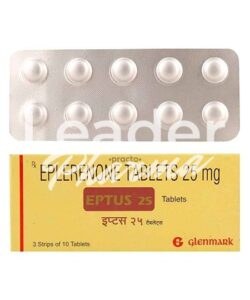
| Available Forms | Film-coated tablets (round, yellow) |
| Strengths | 25mg and 50mg |
| Primary Manufacturer | Pfizer (generic versions from Teva, Sandoz) |
| Packaging | Blister packs of 28-30 tablets |
| UK Classification | Prescription-only (Rx) |
Inspra contains the active ingredient eplerenone, a cardiovascular medication classified under ATC code C03DA04 as an aldosterone antagonist diuretic. Designed for oral administration, these film-coated tablets are produced by Pfizer, with generic alternatives also available. In the UK, pharmacies dispense Inspra strictly as a prescription medication following consultations with healthcare providers. Packaging typically involves blister strips containing either 28 or 30 tablets to support monthly treatment cycles. Patients should maintain tablets at room temperature in their original containers while being aware that pharmacist guidance is essential for safe use of this potassium-sparing prescription diuretic.
Pharmacology of Inspra: how it works in your body
Mechanism of action
Inspra works by selectively blocking aldosterone receptors, a hormone that regulates sodium and potassium balance. This precise mechanism reduces salt and fluid retention while preventing potassium loss in the kidneys. By inhibiting aldosterone’s effects, the medicine helps ease heart strain and lowers blood pressure through multiple physiological pathways.
Metabolism and elimination
After ingestion, the body absorbs Inspra rapidly with maximum concentrations occurring within 1-2 hours. The liver processes eplerenone primarily through CYP3A4 enzymes, creating inactive metabolites, while approximately 67% of the drug leaves the body through urine within renal excretion pathways. Its half-life ranges between 4-6 hours in adults with functional kidney performance.
Significant interactions
CYP3A4 inhibitors like ketoconazole significantly increase eplerenone concentrations and must be avoided. Potassium supplements and salt substitutes containing potassium heighten hyperkalaemia dangers. NSAIDs such as ibuprofen may impair kidney function while combining with ACE inhibitors demands careful potassium monitoring.
Medical uses and indications in the UK
- Heart failure after myocardial infarction: Licensed treatment for patients with left ventricular dysfunction following heart attacks to improve survival outcomes.
- Hypertension: Used off-label in the UK as a blood pressure medication, alone or added to existing treatment regimens.
- Off-label usage: Sometimes utilised under specialist guidance for resistant hypertension cases where multiple standard treatments prove insufficient.
Special considerations include avoiding Inspra entirely during pregnancy due to potential fetal development concerns. Children and adolescents are typically not prescribed this medication as safety hasn’t been established. Elderly patients require regular monitoring of kidney function and potassium levels to prevent severe complications.
Standard dosage and administration guidelines
| Medical condition | Initial dose | Maintenance dose | Administration notes |
|---|---|---|---|
| Heart failure | 25mg once daily | 50mg once daily (after 4 weeks if tolerated) | Consistent timing each day enhances compliance |
| Hypertension | 50mg once daily | Adjust based on blood pressure and potassium (max 100mg/day) | Never split or crush film-coated tablets |
For all indications, take tablets whole with water – food doesn’t significantly affect absorption. Heart failure treatment involves long-term management typically extending over months or years. Tablets should be stored at standard room temperature under 25°C, kept in original packaging to avoid moisture damage. If a dose is missed, take it only if more than 8 hours remain until the next scheduled dose. Report any dizziness, irregular heartbeat, or muscle weakness to your healthcare provider immediately. The NHS provides additional detailed usage advice on prescription diuretic management for patients.
Inspra dosage adjustments in special cases
Managing Inspra requires special care in certain health conditions. For patients with reduced kidney function, extra precautions are essential – if eGFR falls between 30-60, potassium levels require frequent monitoring, while those with eGFR below 30 must avoid this medication entirely due to severe renal risks. Dialysis patients face similar limitations.
Liver impairment also demands attention; mild cases may need regular checks, but severe hepatic dysfunction typically rules out Inspra use due to potential complications. Regarding potassium monitoring, checking serum potassium levels before starting and during treatment becomes non-negotiable for safety.
If a dose gets forgotten, skip it unless the next scheduled dose remains distant. Accidental overdose necessitates urgent care priority on hyperkalaemia management and requires acute intoxication protocols.
Warning: Severe kidney impairment (eGFR
Key Inspra contraindications and warnings
Never combine Inspra with certain conditions or medications due to life-threatening risks. Absolute contraindications include:
Relative cautions apply for diabetes patients with microalbuminuria, or those taking ACE inhibitors/ARBs where electrolyte imbalance dangers amplify. Potassium-sparing characteristics make baseline and periodic lab tests for both potassium and creatinine mandatory before and throughout therapy.
Additional comorbidity alerts cover risk elevation in someone with heart failure – where hyperkalaemia risks compound – and adrenal gland problems where hormone interactions could occur.
Inspra side effects experience
What might patients notice when taking Inspra? Common reactions involve:
- Hyperkalaemia symptoms (muscle weakness, irregular heartbeat) – requiring immediate serum potassium checks
- Dizziness or headaches from blood pressure shifts
- General fatigue that may impact daily activities
Rare but severe issues include acute kidney injury and anaphylaxis. Crucially, hyperkalaemia is a particular risk among heart failure patients, needing stringent monitoring. Unlike spironolactone, this drug’s safety profile shows significantly lower rates of hormone-related effects like gynaecomastia. Management of hypotension often involves dosage adjustments under supervision.
Inspra alternatives and comparison
When considering Inspra (eplerenone), patients often ask about other potassium-sparing diuretics
| Option | Effectiveness (hypertension) | Hyperkalaemia risk |
|---|---|---|
| Inspra (eplerenone) | High | Moderate-High |
| Spironolactone | High | Moderate-High |
| Amiloride | Moderate | Lower |
Amiloride works differently as a sodium channel blocker versus Inspra’s selective aldosterone receptor inhibition
Essential usage guidelines for patients
Correct administration ensures Inspra’s effectiveness while minimising complications:
- Take your dose at the same hour daily, with or without meals
- Avoid potassium-rich foods like bananas, tomatoes, or salt substitutes
- Do not combine with NSAIDs, alcohol, or potassium supplements
- Store tablets at room temperature in their original packaging
Never split tablets – dosage accuracy is vital for potassium control. Prioritise these safety protocols
- Monitor for dizziness/cramping and immediately report to your GP
- Attend all potassium blood tests – critical if taking other antihypertensives
- Review the medication leaflet with your pharmacist