Carbamazepine
In stock
100mg · 200mg · 400mg
from 20,23 £
In brief
- Carbamazepine is an anti-epileptic medicine also used for trigeminal neuralgia and to prevent manic-depressive episodes when lithium has not helped.
- Tablets of 100 mg, 200 mg and 400 mg, in packs ranging from 30 to 360.
- Prescription-only (POM) in the UK; Tegretol is the best-known licensed brand.
Epilepsy, facial nerve pain and mood: where carbamazepine fits
Carbamazepine stabilises overactive nerve cell membranes, reducing the repetitive electrical discharges that underlie certain seizures and nerve pain. According to the UK SmPC it is used for generalised tonic-clonic and partial (focal) seizures, for the stabbing facial pain of trigeminal neuralgia, and to help prevent manic-depressive episodes in people who have not responded to lithium. It is generally not effective for absence seizures or myoclonic jerks and can make some of them worse, which is why the seizure type matters before it is chosen.
Strengths offered and UK licensing
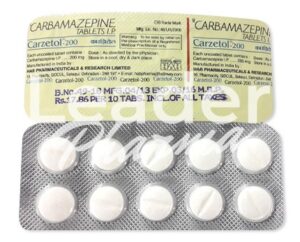
You can choose between 100 mg, 200 mg and 400 mg, and every one of these comes in boxes holding 30, 60, 90, 120, 180 or 360 tablets. The strip in the photograph is an imported generic rather than a UK-licensed pack. In the UK the medicine is POM. Licensed options include Tegretol from Novartis as standard and prolonged-release tablets plus a liquid, along with generic tablets, chewable tablets, an oral suspension and suppositories. The MHRA treats this anti-epileptic as one where people with epilepsy should normally keep to the same manufacturer’s version, so changing brand is a decision for the prescriber.
How the dose is built up
For epilepsy the adult starting dose is 100 to 200 mg once or twice a day, raised slowly until seizures are controlled; many people settle on 800 to 1,200 mg daily in divided doses, and a few need up to 1,600 or even 2,000 mg. Blood level monitoring can help find the right amount. In trigeminal neuralgia the starting dose is 200 to 400 mg a day, usually reaching 200 mg three or four times daily, with 1,200 mg stated as the recommended maximum; once the pain eases the dose is lowered and stopping is tried. For bipolar prevention the usual range is 400 to 600 mg daily, with 1,600 mg as the upper limit. Children’s doses depend on body weight. Tablets can be taken with or after food, and treatment must never be stopped suddenly in epilepsy.
Skin, blood and liver warnings
Serious skin reactions such as Stevens-Johnson syndrome and toxic epidermal necrolysis are rare but most likely in the first months; a spreading rash, blistering or mouth ulcers mean stopping and seeking urgent advice. People of Han Chinese or Thai origin should ideally be tested for HLA-B*1502 first, and HLA-A*3101 has been linked to reactions in European and Japanese patients. Blood counts and liver tests are checked before and during treatment; fever, sore throat or unusual bruising should be reported straight away. Low sodium can occur, particularly in older adults. Carbamazepine is contraindicated with atrioventricular block, past bone marrow depression, acute porphyria or an MAOI taken within the previous two weeks. As with other anti-epileptics, any thoughts of self-harm need prompt medical attention.
Pregnancy, contraception and interactions
Exposure in the womb raises the risk of major birth defects. Women who could become pregnant should only use carbamazepine when other options have been considered, and highly effective contraception is advised during treatment and for two weeks afterwards. Because it is a strong enzyme inducer, it can make hormonal contraceptives fail and lower levels of many other drugs, including direct oral anticoagulants. Macrolide antibiotics, azole antifungals, fluoxetine, diltiazem, verapamil and grapefruit juice can push carbamazepine levels up, while St John’s wort can lower them. Alcohol is best avoided.
Common side effects
Dizziness, unsteadiness, drowsiness, nausea, vomiting, tiredness, a raised liver enzyme reading and a fall in white cells are very common, especially early on. Double vision, headache, dry mouth, fluid retention and weight gain are also reported. These effects raise the risk of falls, and driving should wait until the response is known; in the UK, anyone with epilepsy must also follow DVLA rules.
Decisions about treatment
The neurologist, psychiatrist or GP decides whether carbamazepine is suitable and how it should be adjusted over time.