Risperidone
In stock
1mg · 2mg · 3mg · 4mg
from 29,30 £
In brief
- Risperidone is an atypical antipsychotic, prescription-only in the UK, licensed for schizophrenia, manic episodes and short-term treatment of persistent aggression.
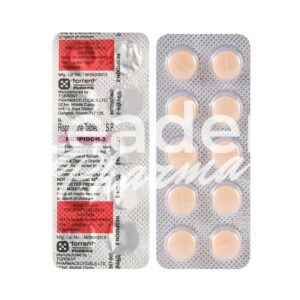
- Tablets of 1 mg, 2 mg, 3 mg and 4 mg, in packs from 30 up to 360.
- Most adults with schizophrenia settle on 4 to 6 mg a day, reached after a short build-up.
Risperidone and what it treats
Risperidone is a second-generation (atypical) antipsychotic that blocks dopamine D2 and serotonin 5-HT2 receptors, helping to calm hallucinations, delusions, disordered thinking and severe agitation. In the UK SmPC it is licensed for schizophrenia and for moderate to severe manic episodes of bipolar disorder. Two further uses are strictly short term, up to six weeks: persistent aggression in moderate to severe Alzheimer’s dementia that has not responded to non-drug measures and carries a risk of harm, and persistent aggression in conduct disorder in children from five years and adolescents with below-average intellectual functioning, as part of a wider care plan led by a specialist.
Strengths and pack sizes
The 1 mg, 2 mg and 3 mg tablets are listed in packs of 30, 60, 90, 120, 180 or 360, and the 4 mg tablet in packs of 30, 60, 90, 120 or 360. They are imported generic tablets. The same four strengths are also licensed in the UK as generic risperidone tablets.
Usual doses by indication
For schizophrenia, adults usually start on 2 mg a day, increased to 4 mg on the second day, given once daily or split into two doses; most people do well on 4 to 6 mg daily. Doses above 10 mg have not been shown to work better and increase movement-related side effects, and safety above 16 mg a day has not been assessed. In manic episodes treatment begins at 2 mg once daily, adjusted by 1 mg at a time no more often than every 24 hours, within a range of 1 to 6 mg. Older adults start at 0.5 mg twice daily, moving towards 1 to 2 mg twice daily. In dementia-related aggression the dose is far smaller, usually 0.5 mg twice daily. Starting and later doses are halved, with slower increases, if the kidneys or liver are impaired. The tablets can be taken with or without food, and stopping should be gradual.
UK status and available forms
Risperidone is a prescription-only medicine (POM) in the UK. Generic tablets are licensed in strengths from 0.25 mg to 6 mg, together with orodispersible tablets and a 1 mg/ml oral solution. The Risperdal name currently appears in the UK for the long-acting injection Risperdal Consta, and another long-acting injection, Okedi, is also available. The choice of medicine and dose remains with the prescriber, usually a psychiatrist.
Important safety warnings and interactions
Older people with dementia treated with antipsychotics have a higher risk of death and of stroke, and in trials this was greater when risperidone was combined with furosemide. Other warnings cover dizziness on standing, tardive dyskinesia and other movement disorders, neuroleptic malignant syndrome, raised blood sugar or diabetes, weight gain, raised prolactin, QT prolongation, seizures, priapism and blood clots. Tell the eye surgeon about it before cataract surgery, because of floppy iris syndrome. Risperidone may weaken the effect of levodopa and dopamine agonists; fluoxetine and paroxetine can increase its levels, and carbamazepine, phenytoin and similar enzyme inducers can lower them. Alcohol and sedatives add to drowsiness.
Possible unwanted effects
The adverse reactions reported in at least one in ten people are parkinsonism (stiffness, slowness and tremor), sedation or sleepiness, headache and insomnia. Restlessness, weight gain, increased appetite, raised prolactin with breast or menstrual changes, a blocked nose, constipation and blurred vision are also common. A high temperature with muscle rigidity, uncontrollable movements of the face or tongue, or signs of high blood sugar need urgent medical review.