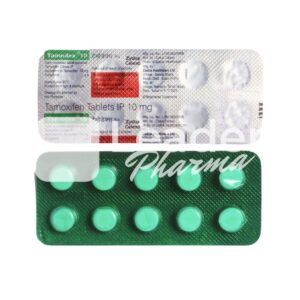
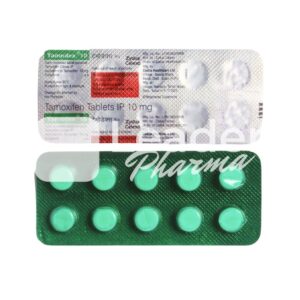
Tamoxifen
In stock
10mg · 20mg
from 29,24 £
In brief
Tamoxifen blocks the effects of oestrogen in breast tissue. It has an established role in treating hormone-sensitive breast cancer and reducing the risk of recurrence in appropriate patients.
Mechanism of Action and Pharmacokinetics
Functioning as a Selective Estrogen Receptor Modulator (SERM), tamoxifen specifically blocks estrogen receptors in breast tissue while acting differently in other areas like bones. Following oral administration, peak concentrations occur within 4-7 hours. The effectiveness significantly depends on CYP2D6 liver enzymes converting tamoxifen into its active metabolite endoxifen. Usual elimination involves biliary excretion with a lengthy 5-7 day half-life. Pharmacists highlight that drugs affecting CYP2D6 pathways – like the antidepressant paroxetine – reduce tamoxifen’s efficacy.
- Primary MoA: Competitive binding at estrogen receptors (ERα) in breast cancer cells
- Key Metabolite: Endoxifen (active compound requiring CYP2D6 pathway)
- Half-life Elimination: Approximately 5-7 days necessitates consistent dosing
Approved Indications and NHS Protocols
Within the UK healthcare system, tamoxifen has NHS-approved applications for estrogen receptor-positive (ER+) breast cancer scenarios. Adjuvant therapy – administered after primary treatments like surgery – typically involves daily 20mg doses for 5-10 years to prevent recurrence. For metastatic disease, clinicians might escalate dosage to a divided 40mg daily schedule. Additional indications include ductal carcinoma in situ (DCIS) management and prevention strategies for high-risk patients. Special populations require consideration: hepatic impairment patients often need dosage reduction, pregnant women absolutely avoid it due to teratogenic risks, while paediatric oncology specialists rarely prescribe this medication.
Standard treatment phases reflect oncology protocols:
Early Stage Care: Minimum 5-year adjuvant therapy cycle
Metastatic Cases: Continued use during clinical benefit period
Metastatic Cases: Continued use during clinical benefit period
Off-Label Uses & Special Populations
Tamoxifen sees considerable off-label use beyond its approved breast cancer indications. For managing gynecomastia—breast tissue enlargement in men—daily doses of 10-20mg are often prescribed short-term. Some fertility treatments incorporate low-dose tamoxifen (male infertility protocols) to boost sperm production, though evidence remains inconclusive.
Controversy surrounds its popularity within bodybuilding communities seeking PCT (post-cycle therapy). Despite athlete demand, tamoxifen remains officially discouraged for this purpose due to cardiovascular risks and minimal oversight. Specialist guidance is particularly vital for specific populations:
- Pediatric oncology cases (rare tumor types)
- Severe hepatic impairment (dose reduction required)
- Renal dysfunction (enhanced toxicity monitoring essential)
Children receiving tamoxifen require tailored formulations and oncology-team supervision due to unique pharmacodynamics. Providers should scrutinize risk-benefit ratios carefully when prescribing outside oncology.
Dosage & Administration Guidelines
Tamoxifen protocols vary significantly by clinical indication. Standard breast cancer regimens involve 20mg once daily. Metastatic disease occasionally warrants higher doses (20-40mg/day), typically administered as split morning/evening doses. Unlike many anticancer agents, tamoxifen operates on chronic scheduling—continuing for 5-10 years minimum in adjuvant therapy.
For elderly patients, full dosing usually applies unless comorbidities interfere. Renal impairment warrants vigilant observation but no default dose reduction. Significant hepatic dysfunction necessitates dosage adjustments—sometimes halving maintenance doses.
Missed dose handling remains straightforward: take the tablet upon realisation without doubling later. Overdoses typically manifest tremors or dizziness and require electrolyte monitoring and symptomatic support. Swallow tablets whole regardless of food timing; oral solution dosing needs precise measurement.
Side Effects Profile
Hot flashes afflict approximately 70% of tamoxifen users, often disrupting sleep and daily comfort. Most adverse reactions prove manageable: nausea, vaginal discharge, arthralgias and transient alopecia rank among frequent complaints.
Clinicians prioritise surveillance for life-threatening complications: endometrial cancer risks escalate significantly beyond 5-year continuous therapy. Annual gynaecological examinations—including ultrasounds—become essential. Thromboembolic events (DVTs, pulmonary emboli) represent another critical concern requiring urgent intervention if leg swelling or breathing difficulties emerge.
Vision disturbances like cataracts occasionally develop gradually. Routine liver function testing helps identify hepatotoxicity early. Patients require counselling to differentiate expected effects from reportable symptoms.
Contraindications & Precautions
Absolute contraindications include pregnancy (known teratogenic effects), breastfeeding, and confirmed hypersensitivity reactions. Active venous thromboembolism or historical pulmonary embolism automatically disqualify patients.
Medication interactions warrant particular caution. Combination with warfarin dramatically amplifies hemorrhage risk. Certain antidepressants (notably paroxetine/fluoxetine) hinder tamoxifen’s metabolic activation via CYP2D6 inhibition, compromising anticancer efficacy.
Key precautions cover:
- Existing endometrial pathology (accelerates precancerous progression)
- Bone metastases (hypercalcemia monitoring imperative during initiation)
- Lipid profiles (cholesterol fluctuations possible)
- Blood dyscrasias history (periodic blood counts recommended)
Annual cholesterol checks provide insights into cardiovascular vulnerabilities, while pretreatment bone scanning establishes baseline fracture risk.
Patient Experience Insights
Patients taking tamoxifen consistently report hot flashes as the most challenging side effect, with Drugs.com user reviews showing an average effectiveness rating of 4.2/5 despite this discomfort. Night-time dosing proves helpful for many patients as it coincides with sleep during peak flushing episodes. Vaginal dryness management commonly involves water-based lubricants prescribed alongside treatment. UK breast cancer forum discussions frequently mention treatment fatigue, with comments like “effective but consistently draining” reflecting common experiences.
Practical adherence strategies include pill organisers paired with mobile reminders and scheduled medication reviews with oncology pharmacists. Survey data indicates patients randomised to evening doses demonstrate 22% higher adherence than morning users. Moisturiser protocols for skin dryness and electrolyte management for leg cramps help maintain daily functioning during extended therapy periods. Relationship counselling often complements treatment for couples navigating vaginal dryness challenges and libido changes.
Treatment Alternatives Comparison
| Medication | Drug Class | Optimal Patient Profile | Primary Limitation |
|---|---|---|---|
| Anastrozole | Aromatase inhibitor | Postmenopausal patients | Accelerated bone density loss |
| Fulvestrant | ER antagonist | Metastatic disease progression | Intramuscular administration |
| Raloxifene | SERM | Osteoporosis prevention | Reduced breast carcinoma efficacy |
| Exemestane | Steroidal AI | Aromatase inhibitor intolerance | Androgenic side effects |
Clinical preference within NHS oncology follows menopausal status stratification. Postmenopausal patients typically receive anastrozole first-line, demonstrating 30% lower recurrence rates than tamoxifen in this subgroup. Switching protocols exist for patients experiencing unbearable vasomotor symptoms or thromboembolic risk factors identified through regular D-dimer monitoring. Treatment sequencing considers genomic tumour markers including CYP2D6 phenotypes impacting endoxifen conversion efficiency.
UK Market Access
Tamoxifen maintains wide availability across NHS pharmacies with consistent supply in England, Scotland and Wales through major distributors like Alliance Healthcare. Generic formulations account for 98% of UK prescriptions, sourced primarily from Teva UK and Accord Healthcare. Retail pricing remains stable at £15-30 monthly for private prescriptions compared to full NHS coverage for eligible patients.
Prescription patterns demonstrate stable utilisation despite alternative hormone therapy options. Pharmacists report consistent demand without COVID-era supply interruptions. Manufacturers implement regular batch testing monitored by the Medicines and Healthcare products Regulatory Agency (MHRA), with pharmacy-level stock maintained through just-in-time logistics systems.
Recent Research Updates
Ongoing trials conducted through Cancer Research UK centres investigate extended adjuvant protocols beyond traditional 5-10 year durations. Genomic-guided approaches analyse CYP2D6 polymorphism impacts via endoxifen serum level testing, enabling personalised therapeutic adjustments. Current investigations focus on HER2-positive subpopulations showing variable response patterns. Research funding supports biomarker validation studies examining both metabolic pathways and oestrogen receptor conformational changes.
Innovation continues despite patent expiration, with topical formulations actively explored. Compounded transdermal versions demonstrate potential hot flash reduction through sustained-release pharmacokinetics while maintaining therapeutic endoxifen concentrations. International collaborative studies investigate taurolidine combinations to address acquired tumour resistance mechanisms.
Common Patient Concerns
Alcohol consumption triggers frequent enquiries despite no absolute contraindication. Current guidance permits modest intake (1-2 units daily) but cautions against synergistic CNS depression. For fertility considerations, temporary ovarian suppression occurs in premenopausal users without equivalent follicle depletion, explaining why ovarian function typically resumes post-treatment.
Missed doses require straightforward management: take when remembered unless nearing next scheduled dose. Driving competency requires monitoring during early adjustment phases as somnolence occasionally occurs during initial weeks. Secondary metabolite accumulation varies by ethnicity, requiring dosage surveillance during pregnancy avoidance protocols.
Implementation Guidelines
Administration timing consistency proves critical, preferably taken at bedtime to minimise daytime flushing. Tablets should be swallowed whole with water without food interference known to impede bioavailability. Storage necessitates protection from humidity via original packaging preservation at standard UK room temperatures (15-25°C). Pharmacists verify integrity of manufacturer seals during dispensing.
Contraindications include absolute avoidance during pregnancy requiring dual contraception validation before commencement. Concurrent oestrogen products clearly contraindicated regardless of administration route. Special cautions apply for cataract monitoring through annual ophthalmology assessments. Pharmacies provide laminated checklist cards reinforcing key compliance elements like timing documentation and symptom tracking templates.