Tegretol
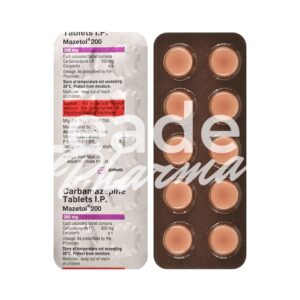
In stock
100mg · 200mg · 400mg
from 20,26 £
In brief
- Tegretol is the original brand of carbamazepine, an anticonvulsant used for epilepsy, trigeminal neuralgia and to prevent mood swings in bipolar disorder.
- Strengths listed: 100 mg, 200 mg and 400 mg tablets, each in packs of 30, 60, 90, 120, 180 and 360.
- It interacts with many medicines, including hormonal contraception, so a full medication check is essential before starting.
Tegretol and the conditions it treats
Tegretol is the Novartis brand of carbamazepine, a long-established anticonvulsant that calms overactive electrical signalling in the brain by blocking sodium channels in nerve cells. The UK SmPC gives three uses. In epilepsy it controls partial seizures, with or without secondary generalisation, and generalised tonic-clonic seizures; it is not usually effective for absences or myoclonic jerks and can make them worse. It relieves the stabbing facial pain of trigeminal neuralgia. It is also used to prevent relapses in bipolar disorder when lithium has not worked.
Available strengths
This product comes as 100 mg, 200 mg and 400 mg tablets, and each strength is offered in packs of 30, 60, 90, 120, 180 and 360. These are the same immediate-release strengths sold in the UK. The brand range also includes prolonged-release tablets, a liquid and suppositories, which are dosed differently and are not interchangeable with the plain tablets without medical advice.
Dosing principles
Carbamazepine is always started low and built up slowly, because the body speeds up its own breakdown of the drug during the first weeks. For adults with epilepsy, the SmPC suggests 100 to 200 mg once or twice a day initially, rising step by step to a usual maintenance range of 800 to 1,200 mg daily in divided doses; some people need up to 1,600 or 2,000 mg. In trigeminal neuralgia the starting amount is 200 to 400 mg daily, increased until the pain is controlled, usually at 200 mg three or four times a day, with 1,200 mg as the recommended maximum. Children and older adults need lower, carefully adjusted amounts. Blood levels may be measured to guide treatment, and your prescriber determines the schedule.
Licensing and brand consistency in the UK
Tegretol is a prescription-only medicine (POM). The MHRA places carbamazepine in its highest-risk group of antiepileptic drugs, which means patients treated for epilepsy should stay on the same manufacturer’s product rather than switching between brands and generics, as small differences in absorption could affect seizure control.
Who must avoid it, and the long list of interactions
Tegretol must not be used in atrioventricular heart block, a history of bone marrow depression, acute porphyria, or together with an MAOI. Because carbamazepine is a strong enzyme inducer, it lowers the levels of many other drugs: combined and progestogen-only pills, implants and hormonal emergency contraception can fail, so a copper coil, a hormonal coil or an injectable method is usually recommended. Warfarin, apixaban, some antidepressants, antipsychotics, other antiepileptics and HIV medicines may all need dose changes. Grapefruit juice, erythromycin, clarithromycin, fluoxetine and isoniazid can raise carbamazepine levels to toxic amounts.
Side effects and safety warnings
On Tegretol, dizziness, unsteadiness, double vision, drowsiness, nausea and dry mouth are common, especially while the dose is being increased. Low sodium, changes in blood counts and raised liver enzymes can occur, so blood tests are part of routine care. Serious skin reactions such as Stevens-Johnson syndrome are rare; people of Han Chinese or Thai origin are screened for the HLA-B*1502 gene before treatment where possible. Taken in pregnancy, carbamazepine raises the risk of birth defects, so women who could become pregnant need expert advice from their epilepsy team and reliable contraception. Fever, sore throat, mouth ulcers, unexplained bruising or a spreading rash require prompt medical assessment.
Everyday guidance
Take Tegretol at regular times with or after food, and never stop suddenly, as withdrawal can provoke seizures. Alcohol increases drowsiness. Driving rules for people with epilepsy set by the DVLA still apply. Whether this treatment is right for you is a matter for your doctor or prescriber to judge.