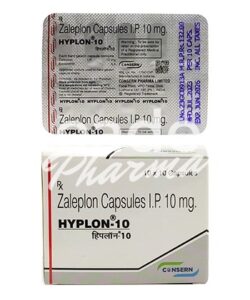
Zaleplon
In stock
10mg
from 33,71 £
In brief
- Zaleplon is a very short-acting hypnotic meant for people whose main problem is getting off to sleep.
- Offered here as 10 mg in packs of 100 or 200; the original product information limits each course to two weeks at most.
- In the UK it is a Class C controlled drug, so supply depends on a prescriber’s decision.
What Zaleplon is and when it is used
Zaleplon is a pyrazolopyrimidine hypnotic, one of the medicines often called Z-drugs together with zopiclone and zolpidem. It binds to the benzodiazepine site of the GABA-A receptor and calms activity in the brain for a short while. Its elimination half-life is only about an hour, which explains its particular niche: it shortens the time it takes to fall asleep, but it does little to stop waking in the early hours. According to the SmPC it is reserved for insomnia with difficulty falling asleep, and only where the problem is severe, disabling or causing marked distress. Good sleep habits and talking therapies such as CBT for insomnia are normally tried first.
Strength and packs listed on this page
The product is listed in one strength, 10 mg, supplied in packs of 100 or 200 doses. Both sizes hold far more than a single treatment course, and the duration limit set out in the SmPC applies regardless of how many doses come in the box. No 5 mg option appears here, which matters for older people and for anyone with liver problems, as those groups are normally started on the lower amount.
How a course is normally taken
The usual adult dose is 10 mg, taken just before going to bed, or after going to bed if sleep simply will not come. People aged 65 and over, and those with mild to moderate liver impairment, are given 5 mg. Only one dose should be used in any night, and the total should not go above 10 mg in 24 hours. Taking it straight after a large or fatty meal slows absorption and can blunt the effect. The SmPC asks for the shortest possible course, up to a maximum of two weeks, because tolerance and dependence can develop with longer use. Stopping after regular use may bring a few nights of rebound insomnia.
Zaleplon and the UK rules
The original branded version, Sonata, once held a UK licence, but no zaleplon product is currently marketed here and the BNF does not include a monograph for it. Under the Misuse of Drugs Act 1971 zaleplon is a Class C substance and sits in Schedule 4 (Part 1) of the Misuse of Drugs Regulations 2001, which makes it a prescription-only, controlled medicine in this country. Whether it is suitable at all, and for how many nights, is a decision for the doctor or prescriber.
Who should avoid it and important interactions
It must not be used by anyone allergic to the drug, or by people with severe liver impairment, sleep apnoea, myasthenia gravis or serious breathing difficulties, and it is not for those under 18. Extra care is needed with a history of depression, alcohol or drug misuse. Alcohol strengthens its sedative effect and should be avoided. Opioids, antipsychotics, sedating antidepressants and antihistamines, anaesthetics and other sleeping tablets all add to drowsiness; combining a hypnotic with an opioid carries a risk of slowed breathing. Rifampicin and some anti-epileptic medicines can make it less effective, whereas cimetidine raises blood levels. Complex sleep behaviours, such as sleepwalking or driving while not fully awake, have been reported with this group of medicines.
Possible side effects
Commonly reported effects include memory gaps for events after a dose, pins and needles, sleepiness and painful periods. Dizziness, headache, nausea, poor concentration, blurred or double vision and feeling detached are seen less often, and hallucinations or confusion are possible, particularly in older adults. Because Zaleplon wears off quickly, a next-morning hangover is less usual than with longer-acting hypnotics, yet nobody should drive or use machinery until they know how it affects them. Report suspected reactions through the MHRA Yellow Card scheme.