Liothyronine
In stock
25mcg · 20mcg
from 68,66 £
In brief
- Liothyronine is the synthetic form of T3 (triiodothyronine), the active thyroid hormone that acts on body tissues.
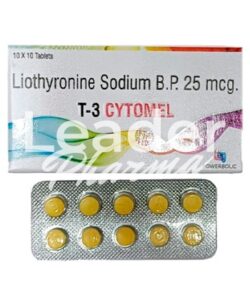
- Listed here as 20mcg and 25mcg tablets, each in a pack of 100.
- Prescription-only in the UK and usually started by a hospital endocrinologist.
Liothyronine compared with standard thyroid replacement
Liothyronine supplies T3 directly, the hormone the body normally makes by converting thyroxine (T4) in the tissues. It starts working within hours and wears off more quickly than levothyroxine, which is why it is reserved for particular situations. The UK SmPC lists myxoedema coma, severe long-standing thyroid deficiency and the low thyroid states that can follow treatment of an overactive thyroid. It can also be given with carbimazole to stop hypothyroidism developing during treatment of thyrotoxicosis. For routine replacement, the SmPC states that levothyroxine normally remains the drug of choice.
Tablet strengths on this page
Two strengths are offered, 20 micrograms and 25 micrograms, each in a pack of 100 tablets. UK-licensed tablets come in 5, 10 and 20 microgram strengths (with 15 microgram tablets also listed), so the 25 microgram tablet does not correspond to a UK-licensed strength and dose calculations should take that into account.
How the dose is set
The SmPC suggests that adults begin with 10 or 20 micrograms every eight hours, increasing after a week if needed to a usual total of 60 micrograms a day in two or three doses. Older people start much lower, at about 5 micrograms a day, and children’s doses depend on age. Because the effect is quick and short-lived, small changes matter, and blood tests together with symptoms guide each adjustment. A baseline ECG is recommended before treatment, with heart monitoring along the way.
UK licensing and prescribing
Liothyronine sodium is licensed in the UK as a prescription-only medicine (POM), available as tablets, capsules, an oral solution and an injection for emergencies. In UK practice, starting or continuing treatment is generally a decision for a consultant endocrinologist, particularly when it is considered for people who still feel unwell on levothyroxine alone.
Who should not take it
The SmPC rules out use in people with angina brought on by exertion, cardiovascular disease, thyrotoxicosis or allergy to an ingredient. It is not used in established myocardial ischaemia. Adrenal insufficiency must be treated first, as thyroid hormone can trigger an adrenal crisis. Diabetes may need closer control, since insulin or tablet requirements can rise. Older adults, who are more likely to have hidden heart disease, need particular care.
Interactions
Liothyronine can increase the effect of warfarin and other anticoagulants, and may change the dose needed for diabetes medicines. Colestyramine reduces absorption, so the two are separated by several hours. Enzyme-inducing medicines such as phenytoin, carbamazepine and barbiturates may reduce its effect, while oestrogens can increase thyroid hormone requirements. Tricyclic antidepressants and digoxin should also be mentioned to your prescriber.
Side effects
Most unwanted effects are signs of too much thyroid hormone: palpitations or a racing pulse, chest pain, tremor, anxiety, sweating, flushing, headache, diarrhoea, sleeplessness and weight loss. Chest pain needs urgent attention via 999 or A&E. Any decision on Liothyronine, including the strength and timing of doses, rests with your doctor or prescriber.