Topiramate
In stock
25mg · 50mg · 100mg · 200mg
from 34,46 £
In brief
- Topiramate is an anti-epileptic medicine also used to prevent migraine in adults.
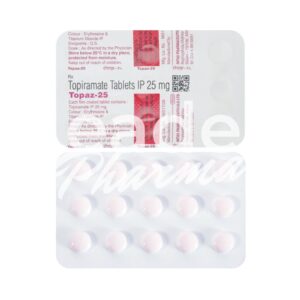
- Available here as 25 mg, 50 mg, 100 mg and 200 mg tablets, in packs from 30 to 360.
- Prescription-only in the UK and subject to a pregnancy prevention programme for women who could become pregnant.
Topiramate: uses and how it acts
Topiramate is an anticonvulsant with several actions on the nervous system: it blocks certain sodium channels, strengthens the calming effect of GABA and dampens excitatory glutamate signalling. The UK SmPC licenses it as monotherapy for partial seizures, with or without secondary generalisation, and primary generalised tonic-clonic seizures in adults and children aged six and over. It is also used as add-on treatment from the age of two, including seizures linked to Lennox-Gastaut syndrome. In adults it is licensed to prevent migraine headaches once other options have been considered; it is not a treatment for an attack in progress.
Strengths and pack sizes
Four tablet strengths are offered: 25 mg, 50 mg, 100 mg and 200 mg. Each is available in packs of 30, 60, 90, 120, 180 or 360 tablets. The 25 mg tablet is the usual starting strength, while the higher ones suit people on stable maintenance doses for epilepsy.
Building up the dose
Slow titration reduces side effects. For migraine prevention, treatment starts at 25 mg at night for a week and rises by 25 mg each week; the recommended total is 100 mg a day in two divided doses, although some people do well on 50 mg. In epilepsy the starting dose is likewise 25 mg in the evening, increased every one or two weeks. As monotherapy adults typically take 100 to 200 mg a day, with 500 mg daily stated as the maximum; as add-on therapy the usual range is 200 to 400 mg daily in two doses. Lower doses are used in kidney impairment. Drinking plenty of fluid helps protect against kidney stones, and the medicine is stopped gradually rather than all at once, as abrupt withdrawal can provoke seizures.
UK licence and pregnancy prevention
Topiramate is a prescription-only medicine (POM) in the UK. The original brand is Topamax, and generic tablets are widely available. Since 2024 the MHRA has required a pregnancy prevention programme, because exposure in the womb raises the risk of major birth defects, low birth weight and neurodevelopmental problems. For migraine it must not be used in pregnancy, and women who could become pregnant need highly effective contraception and an annual review of their treatment. Topiramate can make some hormonal contraceptives less reliable, so the prescriber will advise on a suitable method, which may mean a coil or an additional barrier method. The prescriber decides whether treatment is appropriate.
Interactions and precautions
Carbamazepine and phenytoin lower topiramate levels, and topiramate may raise phenytoin. Alcohol and other sedating medicines increase drowsiness. Combining it with other drugs that cause kidney stones or acidosis, such as acetazolamide or zonisamide, needs care. Mood changes and suicidal thoughts have been reported with anti-epileptic medicines, so family members should know what to look out for. Sudden blurred vision or eye pain may signal acute myopia with secondary angle-closure glaucoma and needs urgent assessment, if necessary at A&E.
Common side effects
Tingling in the hands and feet, tiredness, dizziness, nausea, loss of appetite and weight loss are frequent. Many people notice slowed thinking, word-finding difficulty, poor memory or concentration, which often eases as the body adjusts. Taste changes, especially with fizzy drinks, are typical. Reduced sweating, mainly in children, can lead to overheating in hot weather. A small number of people develop metabolic acidosis, which may show as rapid breathing, tiredness or loss of appetite, and blood bicarbonate is sometimes checked for this reason. Sudden pain in the side or back, or blood in the urine, could point to a kidney stone. Report suspected reactions through the Yellow Card scheme.