Lithium
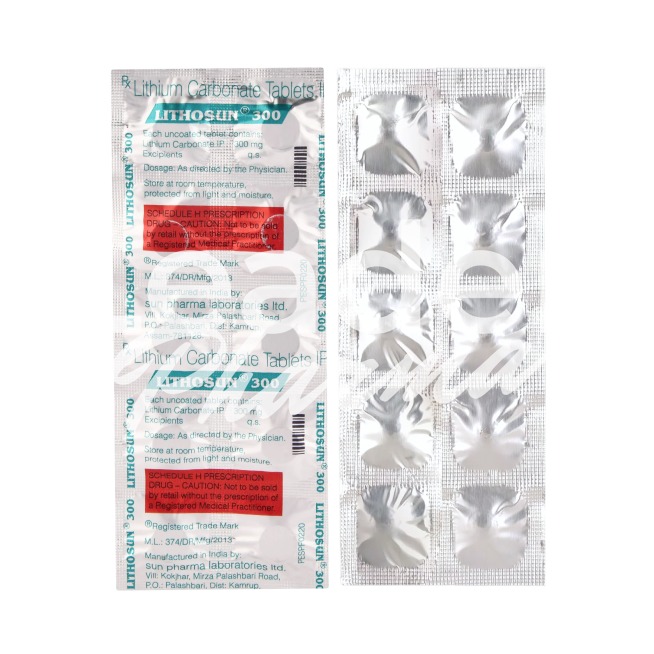
In stock
300mg
from 27,70 £
In brief
Lithium is a mood stabiliser used in the management of bipolar disorder. Regular blood tests are essential because the level needed for treatment is close to the level that can cause toxicity.
Questions and answers about Lithium
I don't have a prescription. Can I buy Lithium at your pharmacy?
In our online pharmacy, you can purchase Lithium without a prescription. We guarantee a seamless purchasing experience by providing access to high-quality medication in an easy and confidential manner.Is it possible that Lithium doesn't work?
Lithium may not be effective for some individuals, as medications can vary in their effectiveness for different people.Can anyone see the contents of my order?
No, the contents of your order with Lithium are strictly confidential. All orders are securely packaged without any external labelling that could reveal the contents, ensuring absolute discretion. We prioritise the privacy of our customers, and no third party will be informed of the details of your order.What is Lithium and how does it work?
Lithium (usually given as lithium carbonate or lithium citrate) is a mood stabiliser used to treat and prevent mania and depression in bipolar disorder, and in some cases recurrent depression. It acts on several signalling pathways in the brain to stabilise mood.Is it legal to use Lithium in the United Kingdom?
Yes, lithium is a prescription-only medicine in the UK. Treatment is started and monitored by a doctor, with regular blood tests.Mechanism of action of Lithium
Lithium is a mood-stabilising drug that helps regulate neurotransmitters in the brain, reducing manic and depressive episodes in bipolar disorder. One of its actions is to inhibit inositol monophosphatase, an enzyme involved in recycling inositol, a chemical messenger used in nerve signal transmission.How long does it take for Lithium to work?
Lithium typically starts to work within 1–2 weeks of starting treatment, with full effects seen after around 6–8 weeks for most people.How long does the effect of Lithium last?
The therapeutic effects of lithium typically last as long as the medication is taken regularly under proper medical supervision.What are the risks of misuse of Lithium?
Lithium has a narrow therapeutic range, so taking it incorrectly or without medical supervision can quickly lead to lithium toxicity, with symptoms such as vomiting, diarrhoea, coarse tremor, confusion and unsteadiness. Proper dosage and blood level monitoring are essential for safe use.How long does Lithium stay in the body?
Lithium has a half-life of approximately 18 to 36 hours, so it takes several days to be cleared from the body after the last dose.Will Lithium show up in a drug test?
Lithium, a prescribed medication used to treat bipolar disorder and other mental health conditions, is generally not detected in standard drug screening tests.Compatibility of Lithium with other medications
Lithium may interact with: - NSAIDs (ibuprofen, naproxen) - Diuretics (bendroflumethiazide, furosemide) - ACE inhibitors and angiotensin II receptor blockers - Antidepressants (fluoxetine, sertraline) - Antipsychotics (haloperidol, risperidone) - Anticonvulsants (carbamazepine, valproic acid) Consult our support for detailed information on lithium interactions.Can one consume alcohol while taking Lithium?
Alcohol is best avoided or kept to a minimum while taking lithium, as it can increase drowsiness and cause dehydration, which may affect lithium levels. Consult your healthcare provider for personalised advice based on your overall health condition and medication dosage.Recommended storage method for Lithium
- Store lithium tablets at room temperature, in a dry place away from direct sunlight.
- Keep them in the original pack.
- Keep out of the sight and reach of children.
How should Lithium be taken and in what dosage?
Lithium should be taken orally exactly as prescribed by your doctor, usually once daily (often in the evening) or in divided doses. Doses depend on the preparation; for lithium carbonate tablets the usual daily dose is around 400 mg to 1,200 mg, adjusted according to blood lithium levels. Different lithium brands are not interchangeable, so always stay on the same preparation.| When to take Lithium |
|---|
| - Follow your doctor's instructions |
| - Take with or without food |
| - Take at the same time each day |
| - Do not stop taking without consulting your doctor |
Can Lithium be taken for an extended period?
Lithium can be taken for an extended period under medical supervision to manage bipolar disorder. However, regular monitoring of blood levels and renal function is necessary due to potential side effects.Overdose of Lithium and what to do in case of an overdose
An overdose of lithium can be dangerous and potentially life-threatening, so it is important to seek medical assistance immediately. If you suspect an overdose, you should:- Contact your doctor or NHS 111 immediately for professional advice, or call 999 in an emergency.
- Closely follow the instructions from your healthcare provider.
- Avoid taking additional doses without consulting a doctor.
Comparison of Lithium with other analogues
| Medicine | Description |
|---|---|
| lithium | Lithium is a mood stabiliser used to treat bipolar disorder. It helps control manic and depressive episodes. |
| lamotrigine | Lamotrigine is an anticonvulsant and mood stabiliser used to treat epilepsy and bipolar disorder. |
| valproic acid | Valproic acid is an anticonvulsant and mood stabiliser used to treat seizures, bipolar disorder, and migraine headaches. |
| aripiprazole | Aripiprazole is an atypical antipsychotic used to treat schizophrenia, bipolar disorder, and as an add-on treatment for depression. |
| olanzapine | Olanzapine is an atypical antipsychotic used to treat schizophrenia and bipolar disorder. |
| quetiapine | Quetiapine is an atypical antipsychotic used to treat schizophrenia, bipolar disorder, and as an add-on treatment for depression. |
| risperidone | Risperidone is an atypical antipsychotic used to treat schizophrenia, bipolar disorder, and irritability associated with autism. |
| asenapine | Asenapine is an atypical antipsychotic used to treat schizophrenia and bipolar disorder. |
| lurasidone | Lurasidone is an atypical antipsychotic used to treat schizophrenia and bipolar depression. |
| ziprasidone | Ziprasidone is an atypical antipsychotic used to treat schizophrenia and bipolar disorder. |
What you should know before taking Lithium
Lithium is a mood stabiliser used to treat bipolar disorder. Discuss potential side effects and interactions with your doctor before starting lithium. Regular blood tests are required to monitor lithium levels.Contraindications for the use of Lithium
Lithium is a mood-stabilising medication, but it has several contraindications that should be considered. These include severe kidney disease, heart disease (including heart rhythm disorders such as Brugada syndrome), untreated hypothyroidism, Addison's disease, low sodium levels and dehydration. Use in pregnancy and breastfeeding requires specialist advice.Possible side effects of Lithium
Lithium is a widely prescribed medication, but it's essential to be aware of potential side effects.- Tremors
- Increased thirst and urination
- Nausea or diarrhoea
- Fatigue or sluggishness
- Weight gain
Lifestyle: diet and physical activity
While taking lithium, drink plenty of fluids and keep your salt intake steady, especially during hot weather or intense exercise, because dehydration and changes in salt intake can raise lithium levels. Consult a healthcare professional for proper guidance.How does mental state affect the effectiveness of Lithium
Mental state can significantly impact the effectiveness of lithium treatment. Individuals with severe mania or depression may require additional medications or therapies alongside lithium for optimal management of their symptoms.When should one consult a doctor?
When taking Lithium, it's important to consult a doctor regularly for monitoring and adjustments to your dosage. Lithium has potential side effects, and your doctor will check your blood levels to ensure safe and effective treatment. Always follow your doctor's instructions and report any concerning symptoms promptly.In which cities can Lithium be delivered?
Lithium is available for delivery in the following cities in the United Kingdom:| City | Region | Delivery Time |
|---|---|---|
| London | Greater London | 9–21 days |
| Birmingham | West Midlands | 9–21 days |
| Manchester | North West England | 9–21 days |
| Liverpool | North West England | 9–21 days |
| Leeds | Yorkshire and the Humber | 9–21 days |
| Glasgow | Scotland | 9–21 days |
| Newcastle upon Tyne | North East England | 9–21 days |
| Sheffield | Yorkshire and the Humber | 9–21 days |
| Bristol | South West England | 9–21 days |
| Edinburgh | Scotland | 9–21 days |
| Belfast | Northern Ireland | 9–21 days |
| Cardiff | Wales | 9–21 days |