Albenza
In stock
400mg
from 11,14 £
In brief
- Albenza is a brand of albendazole, a broad-spectrum medicine against intestinal worms and tapeworm cysts in body tissues.
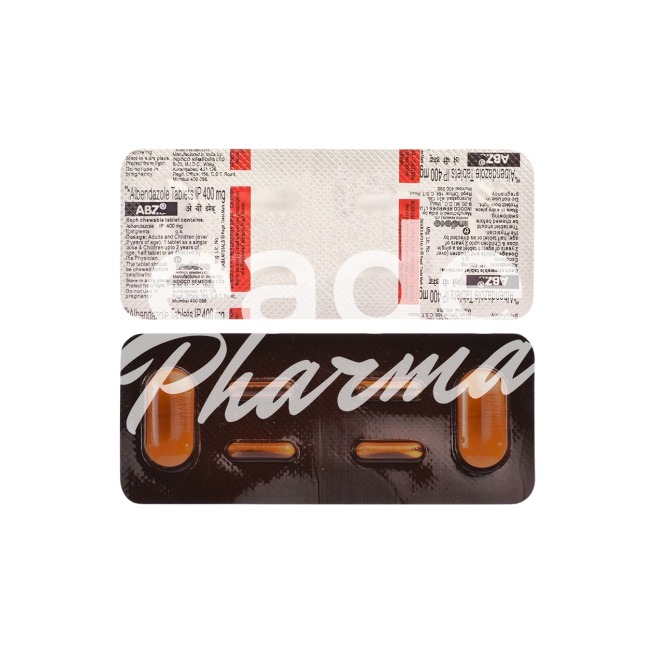
- Each tablet contains 400 mg albendazole; boxes range from 10 to 360 tablets.
- Albendazole is not currently marketed under a UK licence and is used in the UK as an unlicensed medicine under specialist direction.
Albenza and the worms albendazole targets
Albenza is a trade name for albendazole, an anthelmintic of the benzimidazole family. It binds to tubulin inside the cells of the parasite, stopping the formation of microtubules, so the worm can no longer take up glucose, runs out of energy and dies. Doctors use it for gut infections such as roundworm, hookworm, whipworm and threadworm, and, over much longer courses, for tissue infections caused by tapeworm larvae: hydatid cysts of the liver, lung or abdomen (echinococcosis) and cysts in the brain (neurocysticercosis).
Albenza 400 mg tablets and the UK licence situation
The tablets offered contain 400 mg of albendazole, with box sizes from 10 up to 360. They are an imported generic. Albenza is not licensed in the UK, and no albendazole tablet is currently marketed under a UK licence; in the UK it is obtained from special-order suppliers and prescribed as an unlicensed medicine, usually by infectious disease or tropical medicine specialists. For threadworm, licensed UK options such as mebendazole are normally tried first.
Single doses for gut worms, cycles for cysts
There is no UK SmPC for albendazole, so dosing follows specialist advice. Many intestinal infections are treated with a single 400 mg dose, while some, such as strongyloides, need a course lasting several days. For hydatid disease and neurocysticercosis, adults weighing 60 kg or more usually take 400 mg twice a day; lighter patients receive 15 mg per kg daily in two doses, up to 800 mg. Hydatid treatment is given in 28-day cycles separated by 14 tablet-free days, and brain cysts are treated for between one and four weeks. Tablets are taken with food, as a fatty meal improves absorption for infections outside the gut.
Pregnancy, liver and blood count safeguards
Albendazole must not be taken in pregnancy or by anyone allergic to benzimidazoles. Women who could become pregnant need a negative pregnancy test beforehand and reliable contraception during treatment and for a period afterwards advised by the specialist. On longer courses, liver function tests and a full blood count are checked before starting and every two weeks, as raised liver enzymes and, rarely, bone marrow suppression may occur. In neurocysticercosis, dying cysts can provoke swelling in the brain, so steroids and anti-seizure medicines are often given alongside, and the eyes are examined for cysts in the retina first.
Medicines that alter albendazole levels
Praziquantel, dexamethasone and cimetidine can raise blood levels of the active metabolite. Carbamazepine, phenytoin, phenobarbital and ritonavir tend to lower them, which may reduce the effect on tissue cysts. Anyone taking Albenza should share a full list of other medicines with the specialist.
Stomach upset, hair thinning and blood changes
Single-dose treatment is usually well tolerated, with occasional stomach ache, nausea, diarrhoea, headache or dizziness. Longer courses more often cause raised liver enzymes, temporary hair thinning, fever and a fall in white blood cells. A rash, yellowing of the skin, a sore throat with fever or seizures need prompt medical attention. Whether Albenza is appropriate, and for how long, is decided by the treating doctor.