Amiloride
In stock
5mg
from 22,29 £
In brief
- Amiloride is a potassium-sparing diuretic used on its own or with other water tablets to treat oedema and high blood pressure.
- Listed as 5 mg tablets in packs of 100, 200 or 300.
- A prescription-only medicine (POM) in the UK, also found in combination tablets such as co-amilofruse and co-amilozide.
What amiloride does
Amiloride is a mild diuretic that acts in the distal part of the kidney tubule, where it reduces the reabsorption of sodium and, unlike thiazide or loop diuretics, holds on to potassium rather than flushing it out. The UK SmPC describes it as a diuretic for use alone or as an add-on to other diuretics in the treatment of oedema and hypertension. In practice it is often paired with furosemide, bumetanide or a thiazide so that fluid is removed without potassium falling too low. About half of each dose is absorbed, peak levels come three to four hours after a tablet, and the drug leaves the body unchanged in the urine.
Tablet strength and pack options
The listing covers 5 mg tablets in packs of 100, 200 or 300. These are imported generic tablets that are not covered by a UK licence.
Recommended dosing in adults
Used alone, the usual starting dose is 10 mg once daily or 5 mg twice daily, adjusted to response, and the total must not go above 20 mg in a day. When added to another diuretic for high blood pressure or congestive heart failure, it is started at 5 mg or 10 mg daily. In cirrhosis with ascites the starting dose is 5 mg daily. For older people the amount is guided by kidney function, blood salts and how well fluid is cleared. It is not indicated for anyone under 18.
Availability and status in the UK
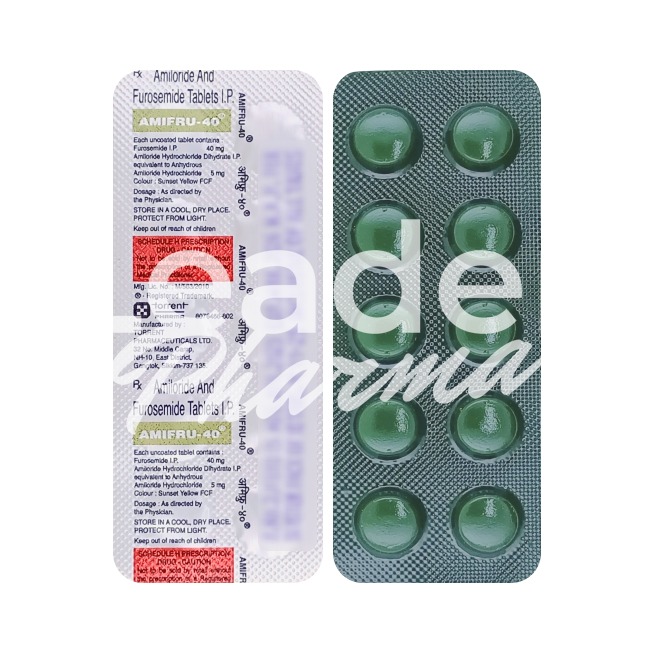
Amiloride is a prescription-only medicine in the UK. Plain 5 mg tablets are licensed, for instance from Wockhardt UK, and a 5 mg/5 ml oral solution exists for people who cannot swallow tablets. It is also part of several UK combination products: co-amilofruse (with furosemide), co-amilozide (with hydrochlorothiazide) and a bumetanide with amiloride tablet. The SmPCs are published on the electronic medicines compendium.
Potassium, kidneys and interactions
The main risk with amiloride is a high blood potassium level, which can upset heart rhythm. It must not be taken if potassium is already raised, in severe kidney impairment, by anyone sensitive to the drug, or alongside potassium supplements or other potassium-sparing medicines such as spironolactone. Blood salts and urea are checked from time to time, more often in older people, diabetics and those with kidney or liver problems. ACE inhibitors, angiotensin-II receptor blockers, ciclosporin, tacrolimus, trilostane and anti-inflammatory painkillers such as indometacin all increase the chance of high potassium. Lithium should not be combined with diuretics, as levels can climb to toxic values. Other blood pressure tablets, tricyclic antidepressants and alcohol may make dizziness on standing more likely. Treatment is stopped at least three days before a glucose tolerance test.
Possible side effects
Apart from raised potassium, significant side effects are uncommon. Nausea, vomiting, abdominal pain, constipation or diarrhoea, dizziness, palpitations, rash, itching, cough, breathlessness, confusion, reduced libido and impotence have been reported. Rarely, blood disorders such as aplastic anaemia and neutropenia occur, and hair loss or visual changes have been described. In people with cirrhosis, jaundice has occasionally deepened during treatment. If a blood test shows high potassium, the SmPC advises stopping amiloride immediately. It can also affect creatinine clearance results, which is worth mentioning before kidney tests. The prescriber decides whether amiloride is appropriate and how it is combined with other treatment.