Midodrine
In stock
2.5mg
from 68,36 £
In brief
- Midodrine is a prescription-only medicine for adults with severe orthostatic hypotension caused by autonomic dysfunction.
- This page offers 2.5 mg tablets in packs of 20, 60 or 120 tablets.
- Doses are spread across the waking day, and the last one is taken at least four hours before bed.
What midodrine does for low blood pressure on standing
Midodrine is a prodrug: once swallowed, it is converted into desglymidodrine, which stimulates alpha-1 receptors in the walls of arteries and veins. The vessels tighten, so less blood pools in the legs when a person gets up. In the UK it is licensed for adults with severe orthostatic hypotension due to autonomic dysfunction, but only after correctable causes have been ruled out and other measures have proved inadequate. Typical symptoms it aims to ease are light-headedness, blurred vision and fainting soon after sitting up or standing.
The 2.5 mg packs and UK-licensed brands
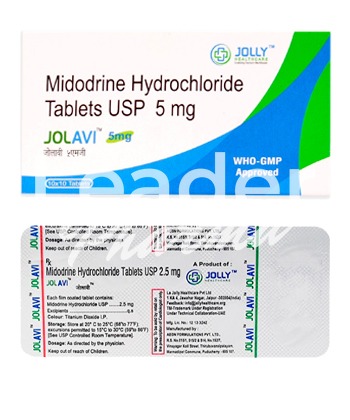
The tablets listed here contain 2.5 mg of midodrine hydrochloride and come in packs of 20, 60 or 120. They are an imported generic, and this brand does not hold a UK licence. Medicines that do hold a UK licence include Bramox (Brancaster Pharma) in 2.5 mg, 5 mg and 10 mg strengths, along with several generic midodrine tablets. All of them are classed as POM, meaning they are supplied only on prescription.
Building the dose around lying and standing readings
According to the SmPC, treatment begins with 2.5 mg three times a day. The amount may be raised at weekly intervals, guided by blood pressure readings taken lying down and standing, up to a usual maintenance dose of 10 mg three times a day. Meals do not need to be avoided around a dose. Because blood pressure can climb too high when lying flat, the final dose of the day should be taken no later than four hours before going to bed, and raising the head of the bed is sometimes advised. Its safety in children has not been established, and older people need careful dose adjustment.
Heart, kidney and eye conditions that rule it out
The medicine is contraindicated in serious organic heart disease such as a recent heart attack, congestive heart failure or conduction problems, and in aortic aneurysm. It is also unsuitable for people with high blood pressure, significant occlusive vascular disease, acute kidney disease or creatinine clearance below 30 ml/min, urinary retention or a serious prostate disorder. Further exclusions are proliferative diabetic retinopathy, phaeochromocytoma, an overactive thyroid and narrow-angle glaucoma. Kidney and liver function should be checked before treatment and at intervals afterwards.
Decongestants, alpha-blockers and other clashes
Decongestants and other sympathomimetics, including some sold over the counter, tricyclic antidepressants, MAO inhibitors and thyroid hormones may push blood pressure up sharply. Alpha-blockers such as prazosin can cancel out the effect. Digitalis glycosides are not recommended because of the risk of heart block, and medicines that slow the pulse need monitoring. Fludrocortisone and other corticosteroids may add to the rise in pressure and increase eye pressure. Paroxetine, fluoxetine, bupropion and quinidine inhibit CYP2D6 and may raise levels of the active metabolite.
Goosebumps, scalp itch and other reactions
Goosebumps, an itchy scalp and discomfort when passing urine are among the most frequently reported reactions. Others include tingling, headache, trouble sleeping, nausea, indigestion, flushing, a rash, urgency or retention of urine, a slow or fast pulse and palpitations. A pounding sensation in the ears, awareness of the heartbeat, headache or blurred vision while lying down may point to supine hypertension and should be reported promptly. Midodrine is not recommended during pregnancy, and the prescriber decides whether and how it is used.