Acular
In brief
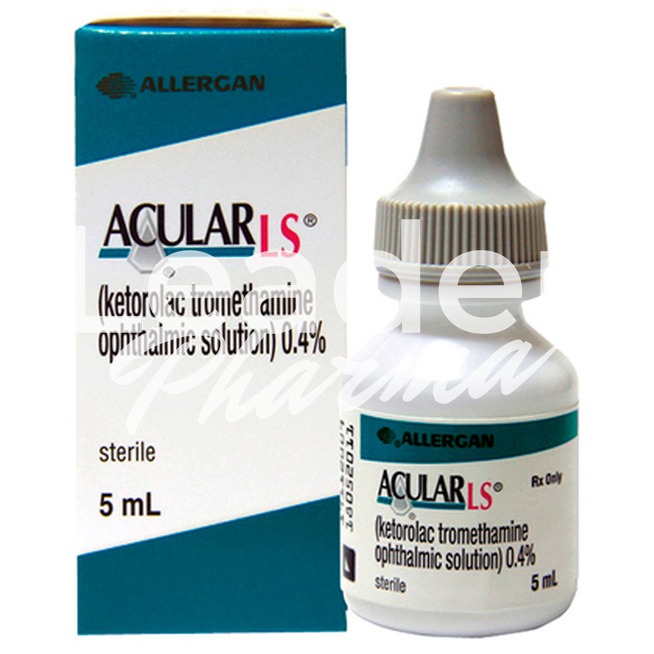
- Acular on this page means Acular LS: ketorolac trometamol 0.4% eye drops, supplied as 5 ml bottles in packs containing 2, 4 or 6 bottles.
- Listed in eye care, this is a UK prescription-only medicine (POM); prescribing and ongoing treatment belong with your doctor.
- UK-licensed Acular is a different strength, 0.5%. Its dosing instructions must not be applied to the 0.4% solution offered here.
- Acular LS labelling describes use after corneal refractive surgery for pain and burning or stinging, for a maximum of 4 days.
- Before starting, report asthma, aspirin or other NSAID reactions, a tendency to bleed, corneal disease and all current medicines.
- Healing may be delayed and serious corneal damage can occur. Severe pain, worsening redness or loss of vision require urgent medical help.
- Keep contact lenses out during instillation and separate different eye drops by at least 5 minutes; discuss pregnancy, especially late pregnancy.
- Packs do not determine course length. Delivery time depends on the shipping method and is shown at checkout.
Acular
Acular at a Glance: Composition and Supply
- Category: eye care.
- Legal classification: prescription-only medicine (POM) in the UK.
- Active ingredient, INN: ketorolac trometamol.
- Available presentation: Acular LS 0.4% sterile eye-drop solution, equivalent to 4 mg/ml.
- Contents: 5 ml per bottle, offered in packs of 2, 4 or 6 bottles.
- Pharmacological class: NSAID, a non-steroidal anti-inflammatory drug.
- Administration: into the eye only.
Check the Acular Formulation First
Under the name Acular we supply ketorolac trometamol 0.4% eye drops (Acular LS). The offer consists exclusively of 5 ml bottles, with a choice of 2, 4 or 6 bottles per pack. Before using Acular, confirm that the strength named on your prescription matches this presentation.
Acular licensed in the UK contains 0.5%; the Acular LS supplied here contains 0.4%. The UK product's licence and dosing schedule must not be treated as instructions for this bottle. The 0.4% use and dose discussed here come from the US manufacturer labelling. Your doctor selects the medicine and remains responsible for supervising the course.
What to Tell the Doctor Before Acular
Bring a list of your prescribed medicines, purchased remedies and eye preparations to the assessment. The surgeon needs to know about allergies, breathing conditions, bleeding problems and previous eye operations before deciding whether Acular is appropriate. An NSAID delivered as eye drops still requires a review of relevant medical history.
- Do not use the solution if you have an allergy to ketorolac trometamol or another ingredient.
- Declare any sensitivity to aspirin or another NSAID; cross-sensitivity is possible, and the UK Acular SmPC lists previous sensitivity as a contraindication.
- Describe any history of asthma, including attacks associated with pain medicines.
- Report a bleeding tendency and any anticoagulant or antiplatelet treatment.
- Mention dry eye, corneal disease, diabetes, rheumatoid arthritis and recent or complicated eye surgery.
Acular and Breathing or Allergic Reactions
Bronchospasm and aggravated asthma have been reported with ketorolac eye preparations. If Acular is followed by wheezing, difficulty breathing, or swelling affecting the face or throat, stop using it and seek urgent medical help. A previous reaction to an NSAID should be discussed before the first dose, rather than tested by trying the drops.
The Place of Acular in Surgical Aftercare
Acular LS 0.4% is labelled for reducing pain and burning or stinging after corneal refractive surgery. In this type of procedure the cornea is reshaped to change the eye's focus. This indication does not make the drops suitable for self-treatment of everyday irritation, an unexplained painful eye or every type of eye operation.
The ingredient acts by inhibiting prostaglandin production, part of the body's inflammatory response. Acular belongs to the NSAID group; it is neither an antibiotic nor a steroid. Your postoperative plan may therefore contain medicines with different jobs, and the surgeon decides which are needed.
Understanding the Acular LS Dose
The manufacturer information for 0.4% Acular LS gives one drop four times a day in the operated eye, as needed for pain and burning or stinging, for up to 4 days following corneal refractive surgery. This is labelling information, not an individual prescription. The doctor determines your dose, treated eye and course length.
If you are unsure about the instructions, contact the prescriber before changing them. Do not begin Acular before the operation or continue beyond the prescribed course on your own initiative. Extra bottles are a supply option, not permission for extra treatment, and the regimen for 0.5% Acular must not be substituted.
A Practical Acular Instillation Routine
- Clean your hands and dry them before handling the bottle.
- Looking upwards with your head tilted back, gently pull down the lower lid.
- Place the prescribed drop into the pocket beneath the lid, keeping the nozzle away from the eye and skin.
- Let the eyelids close gently, then secure the bottle cap.
- Keep Acular for your own treatment; the solution must not be swallowed or injected.
A bottle tip that touches eyelashes, fingers or another surface may become contaminated. Bacteria introduced in this way can cause an eye infection with serious consequences for sight. Seek advice about a contaminated nozzle or damaged bottle instead of continuing to use it unquestioningly.
Acular with Lenses and Other Eye Treatment
Allow an interval of at least 5 minutes between Acular and any other eye-drop medicine. Ask the pharmacist or surgical team to explain the sequence if your plan includes several bottles. Starting another anti-inflammatory preparation independently can add risks without providing an appropriate treatment plan.
Acular LS must not be instilled while contact lenses are being worn. The solution includes benzalkonium chloride, a preservative that is relevant to irritation and lens use. Obtain the surgeon's advice on when ordinary contact lenses may be resumed after surgery. A protective bandage lens needs specific instructions from the eye team; do not remove one yourself.
Why Acular Requires Corneal Monitoring
The transparent front surface of the eye can be affected by topical NSAIDs. Acular may cause keratitis, and susceptible eyes can develop surface breakdown, erosion, thinning, ulceration or perforation. Such complications may threaten vision. If examination shows breakdown of the corneal surface, treatment must stop and the eye needs close monitoring.
Risk is greater with corneal surface defects, reduced corneal sensation, dry eye, diabetes or rheumatoid arthritis, and after complicated surgery or repeat operations within a short period. Attend the follow-up appointments arranged by your surgeon; how comfortable the eye feels cannot replace an examination of healing.
Acular, Healing Delays and Bleeding
NSAID drops may delay wound healing. Combining Acular with a topical corticosteroid can increase healing difficulties, so both should be used together only as part of a medically supervised plan. The prescriber also needs to assess bleeding risk: NSAIDs may affect platelet activity and increase bleeding time, including bleeding around eye surgery.
Keep the doctor informed about medicines that affect clotting. Do not independently stop an anticoagulant, antiplatelet medicine or another prescribed treatment to make room for Acular. Decisions about combinations belong with the clinicians managing your care.
When Acular Symptoms Need Urgent Help
Discontinue Acular and obtain urgent medical help if eye pain becomes severe or worsens, vision decreases, redness becomes pronounced, light is unusually painful or corneal injury is suspected. Seek prompt assessment for discharge, a new eye injury or signs of infection. These symptoms need investigation rather than a higher drop frequency.
Other Effects During Acular Use
Temporary burning and stinging are reported with ketorolac eye drops. Acular LS can also be associated with red eyes, swelling, eye pain and headache; some corneal changes are identified by examination. Contact the clinical team about persistent irritation or any troublesome reaction, while treating the urgent symptoms above as urgent.
Instilling Acular may temporarily blur your sight. Do not drive, cycle or operate machinery until vision is clear, and continue to observe any additional restrictions imposed after the operation.
Discuss Acular During Pregnancy or Breastfeeding
Pregnancy, plans to conceive and breastfeeding should all be raised before prescribing. The UK SmPC does not recommend ketorolac eye drops during pregnancy. Avoid Acular in late pregnancy because NSAID effects can interfere with the baby's circulation; limited absorption from the eye does not establish safety.
Breastfeeding advice also requires a clinical decision: the UK Acular SmPC advises against use, while the Acular LS manufacturer label recommends caution. Your doctor must assess treatment before a course begins. A previously prescribed bottle is not a basis for restarting by yourself.
How Acular Compares at Ingredient Level
| Point of comparison | Ketorolac trometamol | Bromfenac | Nepafenac | Dexamethasone |
|---|---|---|---|---|
| Medicine family | NSAID | NSAID | NSAID | Corticosteroid |
| Role or distinction | Offered as Acular LS 0.4% for labelled discomfort after corneal refractive surgery. | Ophthalmic preparations address postoperative inflammation under their own labels. | Ophthalmic anti-inflammatory preparations have their own formulation-specific directions. | A separate anti-inflammatory class requiring its own precautions and monitoring. |
| Switching treatment | The doctor must choose the substance and formulation; doses and suitability are not interchangeable. | |||
Acular Bottle Care and Pack Selection
Store Acular LS at 15–25°C and protect it from light, as specified by the manufacturer. Keep it capped and beyond children's reach. Follow the expiry and handling directions supplied with the medicine, asking the pharmacist to explain anything unclear. Every pack option contains 5 ml bottles of the same 0.4% solution.
Choose from 2, 4 or 6 bottles subject to the prescription assessment and prescribed supply. Delivery time depends on the shipping method and is shown at checkout.
Clinical references: [manufacturer's Acular LS label](https://www.rxabbvie.com/pdf/acular-ls_pi.pdf); [Acular 0.5% UK prescribing information](https://www.medicines.org.uk/emc/product/855/smpc). The strength distinction applies throughout this page.
Acular: Further Patient Questions
Is Acular a steroid eye medicine?
It is an NSAID. Steroid drops are a different class, and using the two together requires the doctor's oversight because healing problems may increase.
May I put Acular into both eyes?
Use it only in the eye or eyes specified by your doctor. The Acular LS label describes dosing in the operated eye, not routine treatment of both eyes.
What if my Acular bottle touches my eyelashes?
Contact the pharmacist for handling advice because touching the nozzle can contaminate the solution. Do not share the bottle with another person.