Amlodipine
In stock
2,5mg · 5mg · 10mg
from 11,88 £
In brief
- Amlodipine is a once-daily calcium-channel blocker for high blood pressure and for stable or vasospastic angina.
- Tablets of 2.5 mg, 5 mg and 10 mg; packs from 30 to 360, plus a 10-tablet pack of the 10 mg strength.
- Classed as POM in the UK; Istin is the originator brand, and generics are widely prescribed.
How amlodipine lowers blood pressure
Amlodipine belongs to the dihydropyridine group of calcium-channel blockers. By limiting the flow of calcium into the muscle cells of artery walls, it lets the vessels relax and widen, so the heart pumps against less resistance and blood pressure falls. Wider coronary arteries and a lighter workload for the heart also explain its value in angina. The UK SmPC lists three uses: hypertension, chronic stable angina and vasospastic (Prinzmetal's) angina. Its long half-life means a single dose covers a full day.
Strengths, packs and the brand pictured
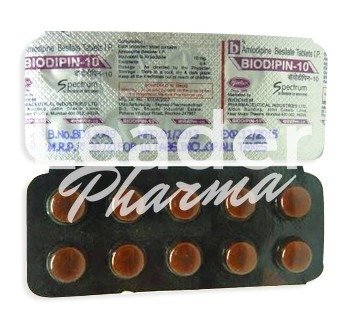
The page offers 2.5 mg, 5 mg and 10 mg tablets. Each strength comes in packs of 30, 60, 90, 120, 180 or 360, and the 10 mg tablet is also sold as a pack of 10. The strip in the image is an imported generic rather than a UK-licensed pack. In the UK amlodipine is a POM medicine. The original brand is Istin from Viatris, and numerous generic 2.5 mg, 5 mg and 10 mg tablets are licensed, together with an oral solution and suspension for those who cannot swallow tablets.
Taking it once a day
For both raised blood pressure and angina, adults usually start on 5 mg once daily, and the SmPC allows an increase to a maximum of 10 mg depending on response. The tablets can be taken at any time of day, with or without food, but at a similar time each day helps routine. It is often combined with a thiazide diuretic, ACE inhibitor, beta-blocker or alpha-blocker without any need to change the dose. Kidney impairment does not alter the amount, whereas people with liver problems should start at the lowest dose and step up slowly, and in older adults any increase is made with care. Children and teenagers aged 6 to 17 with hypertension begin on 2.5 mg, rising to 5 mg if needed after four weeks; higher doses have not been studied in this age group.
When it is not suitable
Amlodipine must not be taken by people who are allergic to it or to related dihydropyridines, or who have severe low blood pressure, shock, a significant narrowing of the outflow from the left side of the heart such as tight aortic stenosis, or unstable heart failure after a heart attack. Those with heart failure need careful monitoring, as fluid on the lungs was reported more often in one study of severe heart failure. It is not established for a hypertensive crisis. In pregnancy it is reserved for cases where there is no safer choice, and it passes into breast milk, so feeding plans should be discussed.
Interactions to be aware of
Clarithromycin, erythromycin, azole antifungals, HIV protease inhibitors, diltiazem and verapamil can increase blood levels and the chance of low blood pressure. Rifampicin and St John's wort may reduce its effect. Grapefruit and its juice are best avoided. Simvastatin should not exceed 20 mg a day alongside this medicine, and tacrolimus, ciclosporin and mTOR inhibitors such as everolimus may need level checks.
Side effects
Fluid retention (oedema) is very common, usually noticed as puffy ankles. Headache (mostly at the start), flushing, palpitations, dizziness, sleepiness, tiredness, nausea, indigestion, stomach ache, altered bowel habit, muscle cramps, breathlessness and visual disturbance are common. Gum overgrowth, liver inflammation and severe skin reactions are very rare. Chest pain that is new or worse than usual needs urgent assessment; call 999 if it is severe.
Who decides the dose
The GP or cardiologist decides whether amlodipine is appropriate and at which strength, based on regular blood pressure readings.