Bimat + Applicators
In stock
3ml
from 34,44 £
In brief
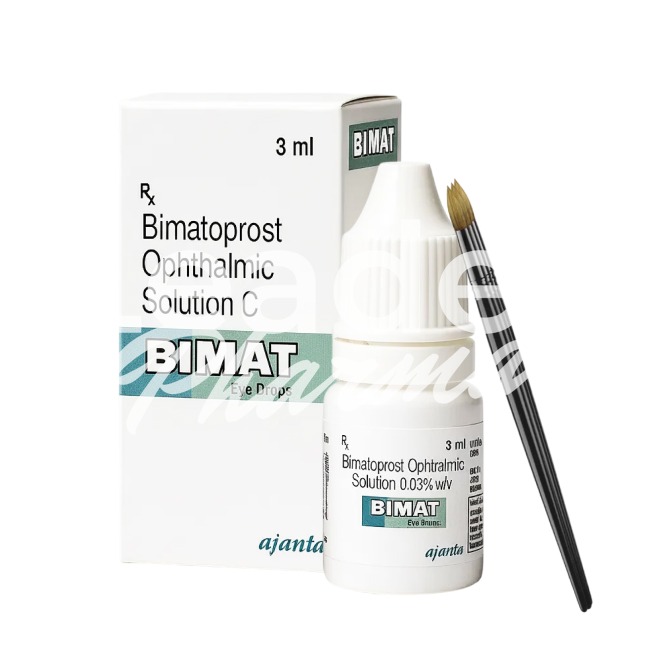
- Bimat is a bimatoprost 0.03% (0.3 mg/ml) eye drop solution supplied with single-use applicators for the upper lash line.
- Offered as 3 ml bottles in packs of 1, 3 or 6.
- In the UK, bimatoprost 0.3 mg/ml is a prescription-only medicine licensed for glaucoma and ocular hypertension; eyelash growth is not a licensed indication.
What Bimat + Applicators contains
Bimat is an eye drop solution containing 0.3 mg of bimatoprost in every millilitre, a strength often written as 0.03%. This kit pairs the bottle with single-use brushes designed for applying the liquid along the base of the upper lashes. Bimatoprost is a synthetic prostamide, chemically related to prostaglandin F2α. Inside the eye it lowers pressure by helping the internal fluid, the aqueous humour, drain away through two separate routes. Glaucoma studies showed longer, thicker and darker eyelashes as a frequent effect, which is why the same solution is also sold with lash-line applicators. Bimat is an imported generic and does not appear among the UK-licensed bimatoprost products.
UK licence and the eyelash question
In the UK, bimatoprost 0.3 mg/ml eye drops are licensed to reduce raised intraocular pressure in adults with chronic open-angle glaucoma or ocular hypertension, used either on their own or together with a beta-blocker drop. Lumigan from AbbVie and several generic versions are available, and all are prescription-only medicines (POM). Eyelash growth is listed in the UK prescribing information as a very common side effect rather than as a use. Treating thin or sparse lashes (hypotrichosis) is not a UK-licensed indication for bimatoprost, so applying it to the lashes falls outside the terms of its UK licence. Raised eye pressure itself needs diagnosis and regular checks by an optometrist or ophthalmologist.
Pack sizes and looking after the bottle
Each bottle holds 3 ml of solution, and the kit is offered in packs of one, three or six bottles, with applicators supplied in the carton. UK-licensed bimatoprost bottles must be thrown away four weeks after first opening, even if some liquid remains, and the storage advice in the leaflet inside the Bimat pack should be followed. Keep the dropper tip away from the eye, eyelids and other surfaces, as contaminated multi-dose bottles have been linked with bacterial keratitis, a serious corneal infection.
How bimatoprost 0.03% is applied
For glaucoma, the UK SmPC recommends one drop in the affected eye or eyes once a day, in the evening. Using it more often can weaken its effect. Where several eye medicines are prescribed, they should be given at least five minutes apart. The solution contains the preservative benzalkonium chloride, which soft contact lenses can absorb, so lenses are taken out beforehand and put back no sooner than 15 minutes later. For the lashes, the leaflets supplied with these kits describe placing one drop on a fresh applicator each evening, drawing it along the skin of the upper lid where the lashes grow, blotting away any excess and using a new applicator for the other eye; the lower lid is not treated. Hair can grow wherever the solution repeatedly touches the skin, so it should not be allowed to run onto the cheek. Anyone already using glaucoma drops, particularly another prostaglandin analogue, should speak to their eye specialist first, as combining these medicines may reduce pressure control.
Who needs extra care
Bimatoprost must not be used by anyone allergic to it or to any of the ingredients, or by people who previously had to stop an eye drop because of a reaction to benzalkonium chloride. Caution is advised after cataract surgery with a torn posterior lens capsule, in the absence of a natural lens, or with other risk factors for macular oedema, and in those with past uveitis, iritis or a herpes simplex eye infection. People with asthma, COPD, a slow heart rate, low blood pressure, kidney problems or moderate to severe liver disease should also discuss it first. It should not be used in pregnancy unless clearly necessary, and its safety in under-18s has not been established. If the drops blur your vision briefly, wait until it clears before driving.
Possible side effects of Bimat
Red eyes, itching and lash growth are very common, as are changes around the eye known as prostaglandin analogue periorbitopathy, such as a deeper eyelid crease or a slightly drooping lid. These may ease partly or completely once treatment stops. Dryness, burning, a gritty feeling, watering, sensitivity to light, blurred vision, red or itchy eyelids, darker lashes and headache are common. Bimatoprost can also gradually turn the coloured part of the eye browner; this change is likely to be permanent, may take months or years to appear and is most obvious when only one eye is treated. Swelling of the central retina (cystoid macular oedema) and inflammation inside the eye are uncommon. Worsening asthma or breathlessness has also been reported. Sudden eye pain, a red painful eye or a change in vision needs prompt assessment at an eye casualty department or A&E, and suspected side effects can be reported through the MHRA Yellow Card scheme.
Deciding with a clinician
Whether Bimat is suitable, and for which purpose, is a decision for a doctor or eye specialist.