Cyclopam
In brief
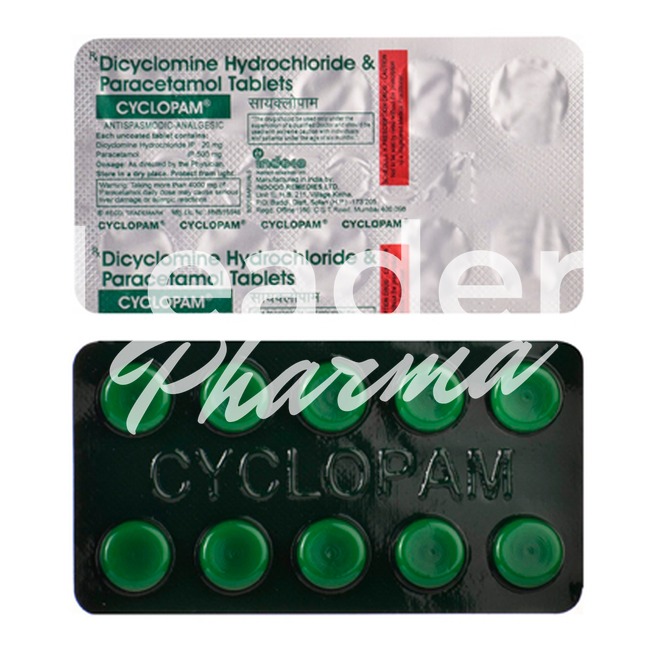
- Cyclopam is an oral tablet combining 20 mg dicycloverine hydrochloride with 500 mg paracetamol, offered in 30, 60, 90 or 120 tablets.
- A doctor selects and monitors treatment for manufacturer-labelled abdominal cramps, colicky pain, IBS-type spasm or period pain.
- Made in India, this combination is not licensed in the UK; dicycloverine and paracetamol are available here as separate medicines.
- Check every medicine for paracetamol: do not use another product containing it, or exceed the adult total of 4 g in 24 hours.
- An overdose needs urgent medical help even without symptoms, as serious liver injury can develop later.
- Glaucoma, bladder emptying problems, myasthenia gravis and gut obstruction require assessment before use; never give these tablets to infants.
- Avoid driving with sleepiness or blurred sight, and take care in heat because sweating may be reduced.
- Delivery time depends on the shipping method and is shown at checkout.
Cyclopam at a Glance: Basic Details
- INN and ingredients: paracetamol and dicycloverine hydrochloride; dicyclomine hydrochloride is another name for dicycloverine hydrochloride.
- Offered presentation: tablets, 20 mg dicycloverine hydrochloride/500 mg paracetamol each.
- Quantities: packs of 30, 60, 90 or 120 tablets.
- Medicine category: gastrointestinal tract and pain relief.
- Manufacture: this combination is made in India.
- Licensing: this combination is not licensed in the UK; dicycloverine and paracetamol are each available in the UK as separate medicines.
- Administration: by mouth, under a doctor's supervision.
Before a Doctor Chooses Cyclopam
Cyclopam contains two medicines in one tablet, so suitability depends on both ingredients. A doctor decides whether to prescribe the combination, specifies the treatment plan and supervises progress. Describing pain as cramp or colic does not confirm its cause, and buying a larger pack does not justify a longer course.
Tell the clinician when the pain began, where it occurs and whether your bowel habits have changed. Cyclopam does not diagnose IBS. Symptoms that are new, unexplained, repeatedly returning or different from usual need reassessment rather than an automatic repeat of treatment.
Cyclopam and Symptoms That Cannot Wait
- Get urgent medical help for sudden, severe abdominal pain, collapse or abdominal pain accompanied by fever.
- A swollen abdomen, vomiting and an inability to pass wind or stool can indicate obstruction and need urgent assessment.
- Vomiting blood, black stools or visible blood in stools require urgent attention.
- If pregnancy is possible, abdominal pain or bleeding needs urgent medical assessment.
Do not use further Cyclopam simply to cover these warning signs. Breathing difficulty, swelling around the face or throat, or collapse calls for emergency help; call 999. Stop the medicine and seek urgent care for a blistering rash or a red, painful eye with a sudden change in vision.
Why Cyclopam Contains Two Substances
One component, dicycloverine hydrochloride, is an antispasmodic acting on smooth muscle in the gastrointestinal tract and also has anticholinergic activity. The other, paracetamol, is an analgesic. Cyclopam therefore combines approaches to spasm and pain, but a response cannot be guaranteed.
Manufacturer-Labelled Uses of Cyclopam
The uses described for Cyclopam include abdominal cramping, colicky pain, IBS-type spasm and period pain, according to manufacturer labelling. The doctor must decide whether the symptoms fit an appropriate indication. Symptom relief does not remove an underlying disorder or establish that further investigation is unnecessary.
Cyclopam and the Paracetamol Safety Ceiling
Never take other paracetamol-containing products with Cyclopam. This includes remedies marketed for colds, flu, headaches or other pain. Across all sources, an adult must not exceed 4 g paracetamol in 24 hours. That figure must not be converted into a Cyclopam dose: taking extra tablets also adds dicycloverine.
Ask for an individual limit if you have liver disease, low body weight, poor nutrition or regular heavy alcohol consumption. A lower amount may be necessary. Kidney disease also needs review before treatment. Paracetamol taken excessively can injure the liver, with serious harm developing after an initially symptom-free period. Paracetamol prescribing precautions.
Too Much Cyclopam: Act Straight Away
If an overdose is possible, obtain urgent medical help immediately, even when you feel completely well. Do not wait for sickness, abdominal discomfort or jaundice. Bring the Cyclopam pack, remaining tablets and information about everything else taken so the medical team can assess the total exposure.
How a Cyclopam Treatment Plan Is Set
The supplied combination's instructions and your doctor's directions determine the dose and course. For context, official UK labelling for dicycloverine alone states 10–20 mg three times a day in adults and children over 12. This separate-product range must not be used as a Cyclopam schedule or taken to establish its suitability for children. Separate dicycloverine tablet labelling.
Swallow Cyclopam with water as directed. Continued pain is a reason to contact the doctor, not to shorten the interval or add tablets. A missed dose must not be replaced with a double dose; seek advice if you are unsure about the next one. Review is needed if symptoms persist or keep recurring.
Health Checks Before Starting Cyclopam
Glaucoma, urinary retention, prostate enlargement, myasthenia gravis and suspected or established gastrointestinal obstruction must be discussed before Cyclopam is started. The combination may be unsuitable because anticholinergic activity can aggravate these problems.
- Mention severe ulcerative colitis, reflux symptoms, a heart condition or a rapid heartbeat.
- Report kidney or liver impairment and previous reactions to either active substance.
- Do not take Cyclopam if you are allergic to either active substance or any excipient; check the pack's ingredient list.
- Older adults need particular care because unwanted effects, including confusion, may be more likely.
Cyclopam During Pregnancy or Breastfeeding
Discuss pregnancy, plans to conceive and breastfeeding before taking Cyclopam. Pregnancy requires a specific assessment of both ingredients. The fact that paracetamol may be selected on its own does not establish that the combination is appropriate. Do not use Cyclopam while breastfeeding because it contains dicycloverine.
Why Cyclopam Is Not for Infant Colic
Do not give Cyclopam to an infant. Dicycloverine is contraindicated in babies under six months, and serious reactions have been reported. Adult combination tablets should never be adapted using a children's dose for a separate medicine.
Unwanted Effects Associated With Cyclopam
You may experience a dry mouth, constipation, nausea, blurred sight, dizziness or drowsiness. Tell the prescriber if these effects are troublesome. Confusion, palpitations and difficulty urinating need prompt medical review; a complete inability to pass urine needs urgent help.
Heat, Alertness and Cyclopam
Dicycloverine can reduce sweating, making overheating possible in hot surroundings. Avoid excessive heat and strenuous exertion in hot weather. Stop Cyclopam and get urgent help if overheating causes fever, pronounced weakness or confusion. Driving, cycling and machinery are unsafe if your sight or alertness is affected; alcohol may worsen impairment. Dicycloverine precautions.
Checking Other Treatments Against Cyclopam
Ask a pharmacist to review your complete medicine and supplement list. Other anticholinergic treatments, sedating antihistamines and certain antidepressants can increase unwanted effects. Flag warfarin, epilepsy treatment, metoclopramide, domperidone and flucloxacillin: relevant interactions involve bleeding, liver risk, gastrointestinal movement or acid balance. Paracetamol with flucloxacillin can cause serious metabolic acidosis, particularly with severe kidney impairment, sepsis, malnutrition or chronic heavy alcohol use. Seek urgent medical help for deep, rapid breathing, severe drowsiness or vomiting. Include remedies bought in shops when discussing Cyclopam.
Substance Comparison for Cyclopam
| Feature | Dicycloverine hydrochloride | Paracetamol | Dicycloverine + paracetamol |
|---|---|---|---|
| Purpose | Gastrointestinal antispasmodic | Analgesic | Antispasmodic and analgesic together |
| Composition | One active substance | One active substance | Cyclopam: 20 mg/500 mg per tablet |
| Key safety consideration | Anticholinergic effects | Liver toxicity after excessive intake | Both sets of precautions apply |
A prescriber chooses the appropriate option; these medicines are not automatic substitutes for one another.
Looking After Your Cyclopam Pack
Follow the storage temperature on the actual Cyclopam packaging. Keep tablets in their original pack, protected from damp and excessive heat and beyond children's reach. Do not use expired tablets; take unwanted medicine to a pharmacy for safe disposal.
Practical Questions About Cyclopam
Does a 120-tablet Cyclopam pack mean a longer course?
No. Available packs contain 30, 60, 90 or 120 tablets of 20 mg/500 mg; your doctor independently decides how long treatment should last.
May I drive after my first Cyclopam tablet?
Assess how it affects you before considering driving. Any dizziness, sleepiness or blurred vision means you must not drive or operate machinery.
What if Cyclopam has not settled the pain?
Contact the prescriber for review instead of taking more. Seek urgent help straight away if any abdominal or allergic warning signs appear.