Desmopressin
In stock
200mcg
from 68,66 £
In brief
- Desmopressin is a synthetic version of the body’s antidiuretic hormone, used to reduce urine production at night and in cranial diabetes insipidus.
- This listing covers 200 microgram (0.2 mg) tablets in packs of 30, 60, 90, 120 and 180.
- When it is taken for bedwetting, fluid intake must be limited around the bedtime dose to avoid low blood sodium (hyponatraemia).
Desmopressin and how it controls water balance
Desmopressin is a man-made analogue of vasopressin, the hormone the pituitary gland releases to tell the kidneys to hold on to water. It acts on the kidney tubules so that less, more concentrated urine is produced, yet it has almost none of the natural hormone’s effect on blood pressure. That selective action makes it useful whenever the body passes too much dilute urine, whether because the pituitary does not make enough hormone or because a child’s kidneys keep producing large volumes overnight.
Conditions treated with 200 microgram tablets
UK patient leaflets for these tablets describe two main uses. The first is primary nocturnal enuresis, meaning bedwetting in children from five years of age (and adults up to 65) who have never achieved reliable dryness at night, provided their kidneys can concentrate urine normally. The second is vasopressin-sensitive cranial diabetes insipidus, where intense thirst and very large urine volumes follow a lack of pituitary hormone, including after pituitary surgery. Other formulations of the same hormone, such as nasal sprays, injections and melts, cover further uses that are outside the scope of this page.
Pack options and dosing according to the SmPC
The product here is the 200 microgram (0.2 mg) tablet, supplied in packs of 30, 60, 90, 120 or 180. For bedwetting, the usual dose is one 200 microgram tablet at bedtime, which may be raised to 400 micrograms if the lower dose is not enough. The need to continue is reassessed after about three months by stopping for at least a week. In diabetes insipidus, a common starting regimen is 100 micrograms three times a day, and most people settle on 100 to 200 micrograms three times daily, with total daily amounts usually between 0.2 and 1.2 mg. Dose changes are guided by urine output and blood tests and set by the prescriber.
Why fluid restriction matters
Because desmopressin stops the kidneys from clearing water, drinking a lot while it is working can dilute the blood and lower sodium levels. When it is taken for bedwetting, fluids should be limited to a small amount from one hour before the bedtime dose until eight hours afterwards. Swimming lessons, parties and hot weather are occasions to take extra care. Headache, nausea, vomiting, unexpected weight gain or confusion may be early signs of hyponatraemia; in severe cases fits can occur. Treatment should be paused during vomiting or diarrhoea until fluid balance is normal again.
UK status and brands
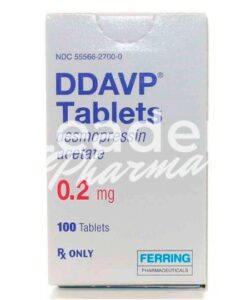
The tablets are prescription-only medicines (POM) in the UK. Ferring markets the 0.1 mg and 0.2 mg strengths as DDAVP, and also supplies Desmotabs 0.2 mg for nocturnal enuresis; generic desmopressin acetate tablets are available as well.
Who should not take it, and medicines to watch
Desmopressin must not be used in people with habitual or psychogenic polydipsia (drinking excessively out of habit), heart failure or other conditions needing diuretics, known low blood sodium, syndrome of inappropriate ADH secretion, or moderate to severe kidney impairment. Medicines that themselves encourage water retention, including tricyclic antidepressants, SSRIs, chlorpromazine, carbamazepine and NSAIDs such as ibuprofen, can raise the risk of hyponatraemia. Loperamide may increase absorption from the gut.
Side effects and day-to-day advice
Headache, stomach ache and nausea are the most commonly reported reactions; emotional changes have occasionally been described in children. Keep a simple record of fluid intake and dry nights so the GP or continence nurse can judge progress. Your doctor decides whether desmopressin is the right option and what dose to use.