Desyrel
In stock
25mg · 50mg · 100mg
from 17,28 £
In brief
- Desyrel is a brand of trazodone, a sedating antidepressant used in the UK, on prescription only, for depression, including depression with anxiety.
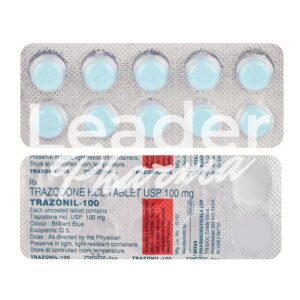
- Offered as 25 mg, 50 mg and 100 mg tablets in packs of 30, 60, 90, 120, 180 or 360.
- Adults usually start on 150 mg a day, taken after food or as a single dose at bedtime.
Desyrel and its active ingredient, trazodone
Desyrel is a trade name for trazodone hydrochloride, an antidepressant that works differently from the SSRIs. It blocks certain serotonin receptors and weakly inhibits serotonin reuptake, and it also has a noticeable calming and sleep-promoting effect, which can help when low mood comes with anxiety, agitation or poor sleep. The UK SmPC describes its use as the relief of symptoms in all types of depression, including depression accompanied by anxiety, and it also gives a separate dosing scheme for anxiety. It is not recommended for anyone under 18.
Tablet strengths and pack sizes
Three strengths are available on this page, 25 mg, 50 mg and 100 mg, each in packs of 30, 60, 90, 120, 180 or 360 tablets. The tablets are imported generics, and Desyrel is not a brand licensed in the UK. The smaller strengths make it easier to take part doses, for example in older people, who often need less.
Dosage and timing
For depression, adults normally start on 150 mg a day, either divided into doses taken after food or as one dose on going to bed. This can be increased to 300 mg a day, with the larger share of a divided dose taken at night; in hospital up to 600 mg a day in divided doses may be used. For anxiety the SmPC suggests starting at 75 mg a day and going up to 300 mg if needed. Very elderly or frail patients begin with 100 mg a day, given in divided doses or at night, and single doses above 100 mg are generally avoided. Taking the tablets after a meal reduces side effects. Caution is needed in liver disease, where liver tests may be checked, and in severe kidney impairment. After long treatment the dose is reduced in stages to avoid nausea, headache and malaise.
UK licensing and available forms
Trazodone is a prescription-only medicine (POM) in the UK. It is supplied as generic 50 mg and 100 mg capsules, 150 mg tablets and oral solutions of 50 mg and 100 mg in 5 ml; there is no UK-licensed 25 mg product. The decision to prescribe Desyrel or another trazodone product, and in what dose, belongs to the doctor.
Who should avoid it and medicines that interact
Trazodone must not be used during a recent heart attack, or when someone is intoxicated with alcohol or sleeping tablets. It should be used carefully in heart disease, with QT-prolonging medicines, epilepsy, liver problems and a history of mania. Use alongside MAOIs, or within two weeks of stopping one, is not recommended, and other serotonergic antidepressants or St John’s wort can trigger serotonin syndrome. Strong CYP3A4 inhibitors such as erythromycin, ketoconazole, itraconazole and ritonavir raise trazodone levels, whereas carbamazepine lowers them. Desyrel intensifies the sedative effect of alcohol, which should be avoided, and it may affect driving, especially early on.
Side effects to look out for
Drowsiness is the effect most people notice at first and usually lessens as treatment continues. Dizziness, headache, nausea, a dry mouth, constipation, blurred vision and light-headedness on standing are also reported. Rare but serious problems include priapism, a painful erection lasting several hours that needs emergency treatment at A&E, as well as jaundice or other signs of liver trouble, an irregular heartbeat and low sodium. Thoughts of suicide early in treatment should be reported at once. Anyone taking Desyrel who notices these symptoms should seek medical advice promptly.