Doxepin
In stock
10mg · 25mg · 75mg
from 30,46 £
In brief
- Doxepin is an older tricyclic medicine prescribed to adults with depressive illness, notably when some sedation is welcome.
- Hard capsules of 10 mg, 25 mg or 75 mg, in packs of 30 up to 360.
- A prescription-only (POM) medicine in the UK, sold under the Sinepin brand and as generics.
Doxepin as a sedating antidepressant
Doxepin belongs to the tricyclic family of antidepressants. It raises the activity of noradrenaline and serotonin in the brain and also has antihistamine properties, which explains the drowsiness that many people notice. The UK SmPC licenses it for the symptoms of depressive illness in adults, especially where sedation is wanted, for instance when poor sleep or agitation is part of the picture. Mood often takes two to three weeks to lift, so the early weeks call for patience and close follow-up.
Capsule strengths and how they compare with UK products
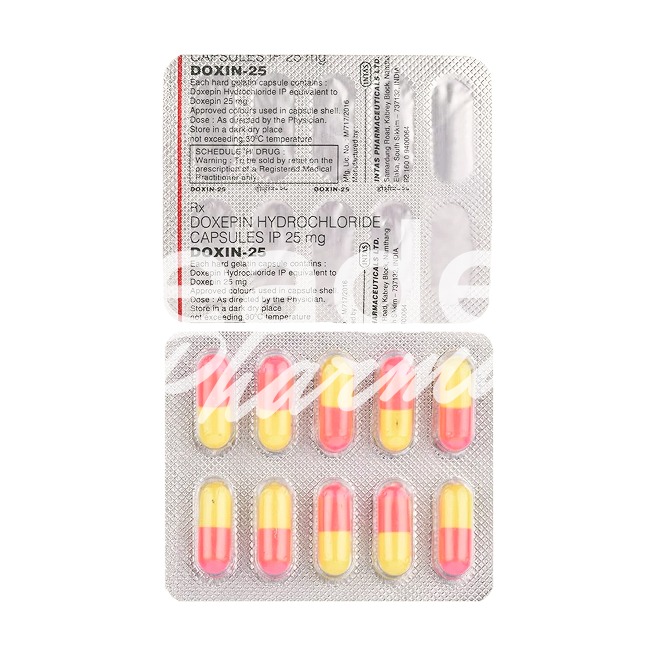
Three strengths are listed: 10 mg (packs of 30, 60, 90, 120 or 180) and 25 mg or 75 mg (packs of 30, 60, 90, 120, 180 or 360). The capsules photographed are an imported generic rather than a UK-licensed pack. Doxepin is POM here, with Sinepin 25 mg and 50 mg and several generic 10 mg, 25 mg and 50 mg capsules on the market. A 75 mg capsule is not among the UK-licensed strengths; 75 mg is, however, the usual starting daily dose in the SmPC.
Dose range in the SmPC
For most adults with moderate or severe symptoms, treatment starts at 75 mg a day and is then adjusted to response. The overall range is 25 to 300 mg daily. Up to 100 mg a day can be taken as a single dose or split; above that, the total is divided into three doses. No more than 100 mg should be taken at any one time, and 300 mg a day is reserved for more severe illness. If sleeplessness is troublesome, a larger share can be taken in the evening. Once a good response is achieved, a lower maintenance dose is often enough. Older people usually start low, may need only half the normal maintenance dose, and are more prone to confusion, agitation and dizziness on standing. Reduced liver or kidney function may also call for a lower dose. It is not recommended for anyone under 18, as safety and effectiveness have not been established.
Who should avoid it, and important warnings
The capsules are unsuitable for anyone allergic to doxepin or other tricyclics and for people with mania, severe liver disease, glaucoma or a tendency to urinary retention; they are also contraindicated while breastfeeding. Depression carries a risk of suicidal thoughts that can rise early in treatment, particularly in adults under 25, so family members or carers should watch for any worsening and seek help immediately. Caution applies after a recent heart attack and with heart block, abnormal heart rhythms, epilepsy, an enlarged prostate and liver or kidney problems. Safety in pregnancy has not been established.
Interactions
Doxepin should not be started during, or within two weeks after, treatment with an MAOI. SSRIs, quinidine and other drugs handled by CYP2D6, as well as cimetidine, can raise levels, while barbiturates may lower them. Alcohol, sedatives and other antidepressants add to drowsiness. Buprenorphine and other opioids increase the risk of serotonin syndrome. Sympathomimetics such as ephedrine and phenylephrine should be avoided, the anaesthetist must be told before surgery, and the effect of some blood pressure medicines and of sublingual nitrates may be reduced. Thyroid hormone doses may need lowering.
Side effects
Drowsiness, a dry mouth and constipation are common. Other reported effects include blurred vision, a fast heartbeat, dizziness, weight gain, sweating, nausea, rash and sensitivity to sunlight. Rarer problems include difficulty passing urine, fits, jaundice, inappropriate release of antidiuretic hormone and blood disorders. Because of sedation, driving and machinery should be avoided until the effect is known. Overdose of a tricyclic is dangerous; anyone who has taken too much needs A&E straight away.
Prescribing decisions
The GP or psychiatrist chooses the dose of doxepin and reviews progress, including when and how slowly to reduce it.