Duphaston
In stock
10mg
from 30,60 £
In brief
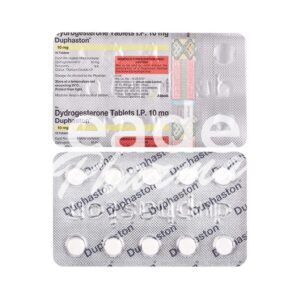
Dydrogesterone is a progestogen with effects similar to those of progesterone. It is used in selected menstrual and reproductive conditions where progesterone support forms part of treatment.
Pharmacology simplified
Duphaston functions by precisely targeting progesterone receptors without androgenic, oestrogenic or glucocorticoid effects. Its molecular structure allows selective action on uterine tissue, producing secretory changes in the endometrium while preserving natural ovulation cycles – an advantage over older progestogens. The medicine achieves peak blood concentrations within 1-2 hours of oral administration. Metabolism occurs primarily through hepatic pathways involving the CYP3A4 enzyme system.
Food has little effect on its absorption. However, enzyme-inducing medications like rifampicin can accelerate its breakdown. No significant impact on blood pressure, glucose levels or lipid profiles has been observed at normal dosages. Patients with pre-existing liver conditions require enhanced monitoring during progesterone therapy due to hepatic processing pathways.
Approved and off-label uses
Licensed uses of dydrogesterone cover progesterone-related conditions, including luteal phase support in fertility treatment, threatened and habitual miscarriage, endometriosis, and regulation of irregular periods or amenorrhoea. These applications stem from dydrogesterone’s ability to promote secretory endometrium development without disrupting pituitary-ovarian communication.
- Infertility protocols: Cyclical regimens across multiple ovulation cycles
- Recurrent pregnancy loss: Daily progesterone supplementation until 20 weeks’ gestation
- Symptomatic endometriosis: Long-term management option (6+ months)
Beyond approved indications, clinicians sometimes prescribe dydrogesterone off-label for polycystic ovarian syndrome hormone balancing and specialised IVF protocols. Paediatric use is limited, while geriatric applications typically involve short-term bleeding control or endometriosis management. Though no formal pregnancy category exists, clinical experience supports progesterone therapy during pregnancy following risk-benefit discussion.
Dosage protocols by condition
| Medical condition | Standard adult dosage | Administration period |
|---|---|---|
| Threatened miscarriage | 40mg initial, then 10mg every 8 hours | Until symptom resolution |
| Habitual miscarriage | 10mg twice daily | Until 20 weeks gestation |
| Endometriosis cases | 10mg twice daily | Days 5-25 of cycle (repeated cycles) |
| Irregular menstrual cycles | 10mg twice daily | Days 11-25 of cycle |
| Progesterone deficiency infertility | 10mg daily | Days 14-25 of each cycle |
| Dysfunctional bleeding episodes | 10mg twice daily | 5-7 days |
| HRT combination therapy | 10mg daily | Days 11-25 of cycle with oestrogen |
Treatment courses vary from brief 5-day bleeding control protocols to pregnancy support continuing up to 20 weeks of gestation. For patients with significant renal impairment, standard dosages typically remain appropriate. Severe liver dysfunction generally contraindicates progesterone therapy due to metabolic pathways. Tablets should be stored below 30°C away from humidity. If a dydrogesterone dose is missed, patients should take it upon recall unless the next scheduled dose is imminent.
Safety profile and contraindications
Understanding Duphaston’s safety profile is essential before starting treatment.
Absolute contraindications prevent Duphaston use entirely. Anyone with severe liver impairment should avoid it due to metabolism occurring primarily in the liver. Hormone-sensitive cancers like breast cancer constitute another complete contraindication. Undiagnosed vaginal bleeding requires investigation before considering treatment.
Common side effects
Most side effects are mild and transient. Nausea may occur during the first treatment cycles. Breast tenderness is also common and may relate to progesterone sensitivity. Breakthrough bleeding occurs particularly during initial cycles as hormone levels adjust.
Serious adverse reactions
Thrombosis precautions apply. Patients with personal or family history of blood clots require careful risk-benefit evaluation. Depression episodes have been reported, particularly in those with prior mental health conditions. Liver enzyme monitoring proves advisable during prolonged treatment.
UK alternatives comparison
Duphaston is not currently marketed in the UK. Licensed UK alternatives include:
| Medication | Key clinical benefit | Administration route |
|---|---|---|
| Micronised progesterone (Utrogestan®) | Natural progesterone with extensive pregnancy safety data | Oral/Vaginal |
| Norethisterone | Effective abnormal bleeding control | Oral |
| Medroxyprogesterone | Long-action formulation for endometriosis | Oral/Injectable |
Vaginal progesterone is often used for luteal phase support due to its uterine-targeted effects and reduced systemic side effects. Norethisterone is an alternative for menstrual regulation, although it has stronger androgen-related effects.
Special population guidance
For patients over 65, mobility risk evaluations become essential due to potential dizziness. Diabetics require intensified glucose monitoring upon commencing treatment since progesterone compounds may alter insulin response patterns. Absolute contraindications exist for hepatic impairment cases due to metabolic pathways relying on liver function.
Frequently asked questions
Can Duphaston usage result in birth defects?
No established pattern of birth defects has been linked to dydrogesterone over decades of clinical use. In pregnancy it should only be used as prescribed.
Can I drink alcohol while taking Duphaston?
Alcohol may add to any drowsiness, so avoid driving or operating machinery if affected. Occasional drinking within NHS low-risk guidelines is generally acceptable.
What should I do if I miss a dose?
Take the missed dose as soon as you remember, but do not take a double dose to make up for it.
Can I drive while taking Duphaston?
Duphaston may occasionally cause mild drowsiness or dizziness, so take care when driving until you know how it affects you.
Does Duphaston induce ovulation?
No. Dydrogesterone corrects luteal phase deficiency but does not directly induce ovulation.
Guidelines for proper use
Taking the tablets with food may reduce nausea. Speak to your doctor before using St John’s Wort, as it induces liver enzymes and may reduce the effect of dydrogesterone. Do not stop treatment for threatened miscarriage on your own – decisions about stopping should be made with your clinician.
What to avoid
- St John’s Wort preparations
- Bathroom medicine cabinet storage
- Self-directed termination during miscarriage prevention protocols