Fluoxetine
In stock
10mg · 20mg · 60mg
from 32,31 £
In brief
- Fluoxetine is an SSRI antidepressant, prescription-only in the UK, licensed for depression, obsessive-compulsive disorder and bulimia nervosa.
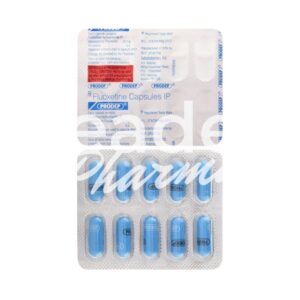
- Hard capsules of 10 mg, 20 mg and 60 mg, in packs of 30 to 180 capsules.
- Most adults take 20 mg a day; 60 mg is both the bulimia dose and the general upper limit.
Fluoxetine and the conditions it is licensed for
Fluoxetine is a selective serotonin reuptake inhibitor (SSRI), one of the longest-established antidepressants in this class. It increases serotonin signalling in the brain and, unlike most of its relatives, stays in the body for a long time, because both the drug and its active breakdown product, norfluoxetine, have very long half-lives. The UK SmPC covers three adult uses: major depressive episodes, obsessive-compulsive disorder (OCD) and bulimia nervosa, where it supports psychological therapy by reducing bingeing and purging. Children from the age of eight with moderate to severe depression may also be treated, but only under specialist care and only if depression has not responded to four to six sessions of talking therapy.
Capsule strengths and pack sizes
This listing offers 10 mg and 20 mg capsules in packs of 30, 60, 90, 120 or 180, and 60 mg capsules in packs of 30, 60, 120 or 180. They are imported generics; all three capsule strengths are also licensed in the UK as generic fluoxetine capsules.
Dosing by condition
For depression in adults the recommended dose is 20 mg a day, reviewed within three to four weeks. If the response is poor, it may be increased gradually up to 60 mg. In OCD the starting dose is also 20 mg, with gradual increases to a maximum of 60 mg if there is too little improvement after two weeks; treatment is reconsidered if nothing has changed by ten weeks. Bulimia nervosa is treated with 60 mg a day. In older people the daily dose should generally stay at or below 40 mg, and in liver impairment a lower or less frequent dose, such as 20 mg on alternate days, may be used. The capsules can be taken as a single or divided dose, with or between meals. Depression is usually treated for at least six months after recovery.
Legal status and UK products
In the UK fluoxetine is a prescription-only medicine (POM). Generic hard capsules are licensed in 10 mg, 20 mg, 30 mg, 40 mg and 60 mg strengths, alongside a 20 mg in 5 ml oral liquid, Olena 20 mg dispersible tablets and 10 mg tablets. Only the prescriber can judge whether it is the right medicine and at what strength.
Safety: contraindications and interactions
It must not be combined with irreversible, non-selective MAOIs. Because its effect lingers, at least five weeks must pass after the last dose before such an MAOI is started, while fluoxetine itself can be started two weeks after stopping one. Metoprolol used for heart failure is also contraindicated. Fluoxetine strongly blocks the liver enzyme CYP2D6, which can reduce the benefit of tamoxifen and raise levels of some heart, psychiatric and pain medicines. Serotonergic medicines such as tramadol, triptans, lithium and St John’s wort increase the risk of serotonin syndrome, and warfarin or anti-inflammatory painkillers increase the risk of bleeding. Caution is also needed with epilepsy, diabetes, heart rhythm problems and a history of mania.
Side effects and coming off the medicine
The effects reported most often are difficulty sleeping, headache, diarrhoea, nausea and tiredness. Others include loss of appetite, anxiety, yawning, sweating, a rash and sexual problems. Thoughts of self-harm should be reported straight away, particularly by anyone under 25. Withdrawal effects such as dizziness, tingling or sleep disturbance are possible, and stopping is normally spread over one to two weeks, although the long half-life may make these effects less abrupt than with shorter-acting SSRIs.