Glucovance
In stock
400/2.50mg · 500/5mg
from 35,19 £
In brief
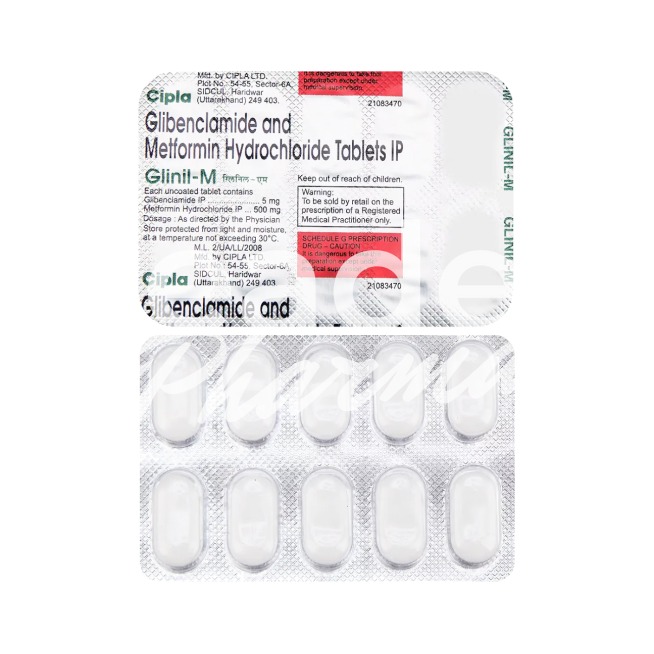
- Glucovance is a combination tablet of metformin and glibenclamide, two blood-glucose-lowering medicines used in type 2 diabetes.
- Two strengths are offered, 400 mg/2.5 mg and 500 mg/5 mg, in packs of 30 to 360 tablets.
- The glibenclamide part can cause low blood sugar, and metformin needs regular kidney function checks.
Glucovance: two diabetes medicines in a single tablet
Glucovance brings together metformin, a biguanide, and glibenclamide, a sulphonylurea. The two act in different ways. Metformin mainly reduces the amount of glucose released by the liver and helps the body respond better to its own insulin, while glibenclamide prompts the pancreas to release more insulin. Combinations of this kind are intended for adults with type 2 diabetes whose blood glucose is not adequately controlled on diet, exercise and a single medicine. They are not suitable for type 1 diabetes.
Strengths and the UK position
Two strengths are listed: 400 mg of metformin with 2.5 mg of glibenclamide, and 500 mg of metformin with 5 mg of glibenclamide, each in packs of 30, 60, 90, 120, 180, 240 or 360 tablets. Glucovance is an imported product and is not a UK brand name; a fixed combination of glibenclamide and metformin does not currently hold a UK licence. Both components are prescription-only medicines (POM) in the UK, and metformin is widely licensed here on its own and in other combinations.
Dosing and taking the tablets
The tablets should be taken with meals, which reduces stomach upset from metformin and lowers the chance of hypoglycaemia between meals. The prescriber chooses the strength and number of tablets according to blood glucose readings and adjusts them in small steps. The UK SmPC for metformin sets a maximum of 3 g a day in divided doses, and lower limits apply when kidney function is reduced. Because the two strengths contain different amounts of glibenclamide, switching from one to the other is not a simple tablet-for-tablet swap. Regular blood glucose and HbA1c checks guide any change.
Low blood sugar and other key warnings
Sulphonylureas such as glibenclamide can cause hypoglycaemia, which is sometimes severe and long-lasting and may need hospital treatment. Missed meals, heavy exercise, alcohol and older age make it more likely. Metformin carries a very rare but serious risk of lactic acidosis, mainly when kidney function worsens suddenly, for instance during dehydration from vomiting or diarrhoea. Treatment is usually paused during such episodes, for operations under general, spinal or epidural anaesthesia, and around X-ray scans that use iodinated contrast, restarting no sooner than 48 hours afterwards once kidney function has been checked. Kidney function should be measured before starting and at least once a year. People with G6PD deficiency risk haemolytic anaemia with glibenclamide.
Who should avoid Glucovance
The individual SmPCs exclude severe kidney impairment (for metformin, a GFR below 30 ml/min), severe liver disease, ketoacidosis or any other acute metabolic acidosis, diabetic pre-coma, and serious infection, shock or dehydration. Conditions that starve tissues of oxygen, such as decompensated heart failure, respiratory failure or a recent heart attack, are also contraindications, as are alcoholism, porphyria and allergy to sulphonylureas or sulphonamides. Glibenclamide must not be taken with bosentan. Use during pregnancy or breastfeeding needs to be discussed with the prescriber.
Interactions and side effects
The glucose-lowering effect can be strengthened by ACE inhibitors, salicylates such as aspirin and other NSAIDs, oral anticoagulants and alcohol, and weakened by medicines such as acetazolamide and sympathomimetics. Beta-blockers and clonidine can mask the warning signs of a hypo. Glibenclamide may raise ciclosporin levels, and it should be taken at least four hours before colesevelam. Diuretics, NSAIDs and blood pressure medicines that affect the kidneys need care with metformin. The most frequent side effects are nausea, vomiting, diarrhoea, abdominal pain and loss of appetite, usually early on; taste disturbance and lower vitamin B12 levels are also common. Whether Glucovance is appropriate, and at what dose, is decided by the prescriber.