Nebivolol
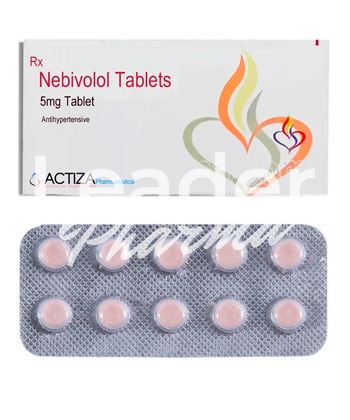
In stock
2,5mg · 5mg · 10mg
from 28,23 £
In brief
- Nebivolol is a beta-blocker, prescription-only in the UK, used for essential hypertension and for stable chronic heart failure in people aged 70 or over.
- Listed as 2.5 mg, 5 mg and 10 mg tablets in packs of 30 up to 360 (10 mg up to 180).
- For high blood pressure the usual adult dose is a single 5 mg tablet a day.
What nebivolol is prescribed for
Nebivolol belongs to the beta-blocker group. It is highly selective for the beta-1 receptors in the heart, so it slows the heart rate and reduces the force of each beat, and it also has a mild widening effect on blood vessels. The UK SmPC lists two uses: essential hypertension (high blood pressure without an identifiable underlying cause) and, in patients aged 70 or older, stable mild to moderate chronic heart failure, where it is added to standard treatment. Lowering blood pressure over the long term reduces the strain on the heart, kidneys and arteries.
Tablet strengths and pack sizes
Three strengths are offered. The 2.5 mg and 5 mg tablets come in packs of 30, 60, 90, 120, 180 or 360, and the 10 mg tablet in packs of 30, 60, 90, 120 or 180. These are imported generic tablets. All three strengths are also licensed in the UK as generic nebivolol tablets.
Dosing for blood pressure and heart failure
For hypertension in adults the dose is 5 mg once daily, preferably at the same time each day, and the tablet may be taken with a meal. Blood pressure usually starts to come down after one to two weeks, although the full effect can take around four weeks. People over 65 and those with kidney impairment typically begin on 2.5 mg, which can be raised to 5 mg if needed. In heart failure the dose is built up slowly under an experienced doctor, usually from 1.25 mg to 2.5 mg, then 5 mg and finally 10 mg once daily, with one to two weeks between steps. In that setting 10 mg is the maximum; for high blood pressure alone the SmPC dose is 5 mg a day. Nebivolol should not be stopped suddenly, as heart failure or angina can worsen; the dose is reduced gradually instead.
UK availability and legal status
Nebivolol is a prescription-only medicine (POM) in the UK. The original brand is Nebilet 5 mg tablets, and generic tablets are licensed in 1.25 mg, 2.5 mg, 5 mg and 10 mg strengths. Starting, changing or stopping treatment is a decision for the prescriber.
Who should not take it and key interactions
This beta-blocker must not be used with liver impairment, acute or decompensated heart failure, cardiogenic shock, sick sinus syndrome or second- or third-degree heart block without a pacemaker. It is also contraindicated with a history of asthma or bronchospasm, untreated phaeochromocytoma, metabolic acidosis, a resting heart rate below 60 beats per minute, systolic blood pressure under 90 mmHg and severe circulation problems in the limbs. Combinations to avoid include verapamil- or diltiazem-type calcium channel blockers, class I antiarrhythmics such as flecainide, and centrally acting drugs like clonidine or moxonidine. Paroxetine, fluoxetine and quinidine can raise nebivolol levels. In diabetes it may hide warning signs of a hypo such as a racing heart, and an anaesthetist should know about the treatment before surgery.
Side effects you may notice
For people treated for high blood pressure, the common effects listed are headache, dizziness, tingling or pins and needles, breathlessness, constipation, nausea, diarrhoea, tiredness and swelling (oedema). Less often, a slow heartbeat, low blood pressure, nightmares, depression, impaired vision or wheezing occur. Fainting, a very slow pulse or worsening breathlessness should be reported to a doctor promptly.