Pamelor
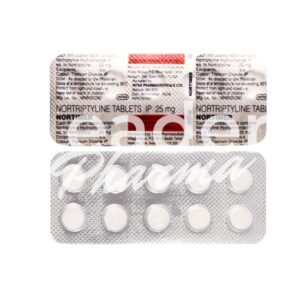
In stock
25mg
from 20,28 £
In brief
- Pamelor (nortriptyline) is a tricyclic antidepressant; in the UK, nortriptyline is licensed for the treatment of major depressive episodes.
- Each tablet contains 25 mg of nortriptyline, in packs of 30, 60, 90, 120, 180, 240 or 360 tablets.
- A prescription-only medicine that must not be combined with MAOIs or taken soon after a heart attack.
Pamelor and the way nortriptyline works
Pamelor is a medicine based on nortriptyline, one of the older tricyclic antidepressants. It slows the reabsorption of noradrenaline and, to a lesser extent, serotonin by nerve cells, so more of these chemical messengers remain active in the brain. In the UK, nortriptyline is licensed for major depressive episodes. Benefit builds slowly: the SmPC says the antidepressant effect usually appears after two to four weeks, and some side effects can show up well before mood starts to lift.
Strength, pack sizes and status in the UK
The tablets offered here each contain 25 mg of nortriptyline and come in packs of 30, 60, 90, 120, 180, 240 or 360. Pamelor is not a brand name used in the UK; this is an imported product. Nortriptyline itself holds a UK licence as generic film-coated tablets of 10 mg, 25 mg and 50 mg, and as an oral solution. All of these are prescription-only medicines (POM).
How the dose is usually built up
For adults, the SmPC recommends a low start of 50 mg once a day or 25 mg two or three times daily. If a higher dose is needed, it can be increased in 25 mg steps, no faster than every other day. Once the daily amount goes above 100 mg, blood levels of nortriptyline should be monitored, and more than 150 mg a day is not recommended. Older people normally manage on 30 to 50 mg a day in divided doses, starting at 10 to 20 mg, which is less than a single 25 mg tablet. After recovery, treatment generally carries on for up to six months to reduce the chance of relapse. Stopping should be gradual, over several weeks, because an abrupt halt can cause insomnia, irritability and heavy sweating. Nortriptyline is not recommended for anyone under 18.
When Pamelor must not be used
The SmPC rules out nortriptyline after a recent myocardial infarction (heart attack), in any degree of heart block and in other heart rhythm disorders, as well as in people allergic to the ingredients. It must never be taken alongside a monoamine oxidase inhibitor (MAOI): at least 14 days should pass after stopping an irreversible MAOI, or one day after moclobemide, and an MAOI should not be started until 14 days after the last dose of nortriptyline. Special care is needed with heart disease, low blood pressure, epilepsy, an overactive thyroid, narrow-angle glaucoma, difficulty passing urine or an enlarged prostate, advanced liver disease and bipolar disorder, where a manic phase may be triggered. It should generally be avoided in Brugada syndrome. Blood sugar can rise or fall, so people with diabetes may need their treatment reviewed. In pregnancy it is used only when clearly necessary; during breastfeeding the expected benefit has to be weighed against any risk to the baby.
Medicines and drinks that interact
Sympathomimetics such as adrenaline, ephedrine and phenylephrine, found in some nasal decongestants and local anaesthetic preparations, should not be combined with nortriptyline. The risk of an irregular heartbeat rises with other drugs that prolong the QT interval, including sotalol, methadone and some antipsychotics, and with diuretics that lower potassium. Fluoxetine has been shown to more than double nortriptyline blood levels, and other medicines handled by the liver enzyme CYP2D6, as well as cimetidine, can alter them too. Taking it with buprenorphine may lead to serotonin syndrome. Anticholinergic drugs add to effects such as constipation and urinary retention, and the blood-pressure-lowering action of clonidine may be weakened. Alcohol increases drowsiness, and if surgery is planned, the anaesthetist needs to know about Pamelor.
Side effects, driving and the danger of overdose
Very common effects include a dry mouth, constipation, blurred vision, dizziness, headache, sweating, flushing, a fast or pounding heartbeat and a drop in blood pressure on standing. Weight gain, tiredness, tremor, confusion, lower sex drive, erection problems and ECG changes are also common. Older people are more prone to confusion and falls in blood pressure. In the first weeks, thoughts of self-harm can get worse, particularly in people under 25, and need urgent medical attention. A sore throat, fever or flu-like symptoms during the first ten weeks call for a blood count. Nortriptyline can impair driving and the use of machinery. An overdose is dangerous even when the excess is fairly small, causing seizures, coma and life-threatening rhythm disturbances; anyone who has taken too much Pamelor should go to A&E or call 999 at once. The decision to use nortriptyline, and at what dose, rests with the prescriber.