Parlodel
In stock
2,5mg
from 74,89 £
In brief
- Parlodel (bromocriptine) is a dopamine agonist that lowers prolactin and is also used in acromegaly and Parkinson's disease.
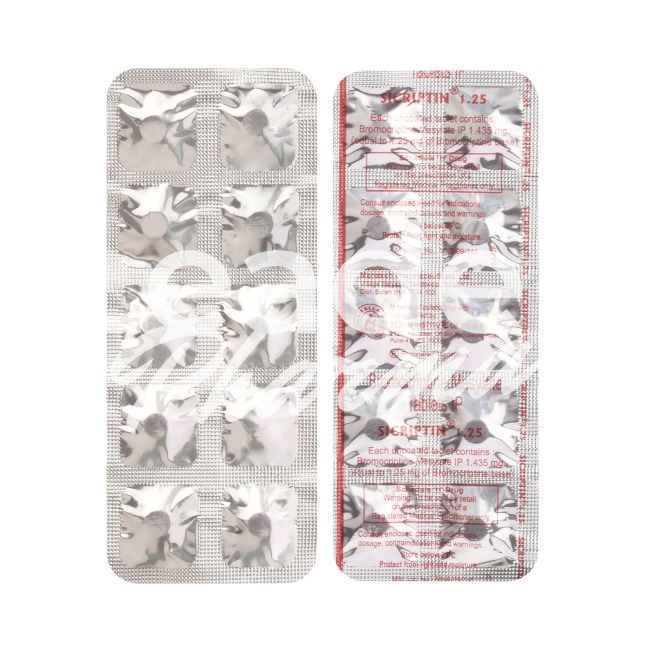
- Each tablet contains 2.5 mg of bromocriptine; packs hold 30, 60, 90, 120, 180 or 240 tablets.
- It is taken with food, and the dose is increased in small steps to keep nausea and dizziness to a minimum.
Parlodel: a dopamine agonist with several uses
Parlodel contains bromocriptine, an ergot-derived medicine that stimulates dopamine receptors. In the pituitary gland this suppresses the release of prolactin, and in the brain it partly makes up for the dopamine lost in Parkinson's disease. The UK SmPC covers a wide range of uses: raised prolactin with low sex-hormone levels or breast milk discharge (galactorrhoea), absent or infrequent periods and related infertility, prolactin-secreting pituitary tumours (prolactinomas), acromegaly alongside surgery or radiotherapy, Parkinson's disease, and stopping breast milk production after birth where there is a medical reason, such as the loss of a baby.
Tablet strength and UK availability
The tablets listed here contain 2.5 mg of bromocriptine and come in packs of 30, 60, 90, 120, 180 or 240. Parlodel is the original brand name for bromocriptine; this product is imported. In the UK, bromocriptine 2.5 mg tablets are licensed as a prescription-only medicine (POM), and the versions currently listed on the electronic medicines compendium are generics.
Building up the dose gradually
Bromocriptine should always be swallowed with food. For most conditions the SmPC suggests beginning with 1 to 1.25 mg at bedtime, moving to 2 to 2.5 mg at bedtime after two or three days, and then increasing by about 1 mg every two to three days until 2.5 mg twice daily is reached. Many people with high prolactin respond to 7.5 mg a day in divided doses. For prolactinomas and acromegaly, the dose may rise further to 5 mg every six hours, and in Parkinson's disease the usual range is 10 to 30 mg a day. The total should not exceed 30 mg daily. When it is used to stop lactation, gradual introduction is not needed: an initial 2.5 mg is followed by 2.5 mg twice daily for 14 days. A starting dose below 2.5 mg needs a suitable lower-strength product or specific directions from the prescriber.
Heart, blood pressure and other reasons for caution
Bromocriptine must not be used by people allergic to it or to other ergot alkaloids, or with uncontrolled high blood pressure, high blood pressure in pregnancy (including pre-eclampsia) or after giving birth. For stopping milk production and other non-life-threatening uses, it is also excluded in coronary artery disease, other severe heart conditions and serious mental illness. Long-term use is ruled out if an echocardiogram shows heart valve disease. Blood pressure should be watched closely in the first days, and treatment stopped at once if severe headache, chest pain, high blood pressure or signs of nervous system toxicity appear. Prolonged, higher-dose use can rarely cause fibrosis of the lungs, the lining of the heart or the tissue at the back of the abdomen, so persistent breathlessness, cough, chest pain, back pain or swollen legs should be reported.
Interactions with Parlodel
Alcohol can make bromocriptine harder to tolerate. Erythromycin and other macrolide antibiotics, azole antifungals, HIV protease inhibitors and octreotide can push its blood levels up. Antipsychotics may weaken its effect, and metoclopramide and domperidone can reduce its prolactin-lowering action. Medicines that alter blood pressure need care, and other ergot alkaloids or vasoconstrictors should not be combined with it after childbirth. Anyone taking Parlodel should let every doctor and pharmacist know.
Side effects, sleepiness and pregnancy
Headache, drowsiness, dizziness, nausea, vomiting, constipation and a blocked nose are among the more common effects, particularly at the start. A dry mouth, leg cramps, confusion and a drop in blood pressure on standing occur less often. Very rarely, sudden episodes of falling asleep occur without warning, so anyone affected should not drive or operate machinery. Impulse control problems such as compulsive gambling, spending or eating can develop with dopamine agonists, including bromocriptine. If pregnancy occurs, treatment is generally stopped after the first missed period, although women with large pituitary tumours need close monitoring. The prescriber decides whether Parlodel is suitable and at what dose.