Verapamil-hcl
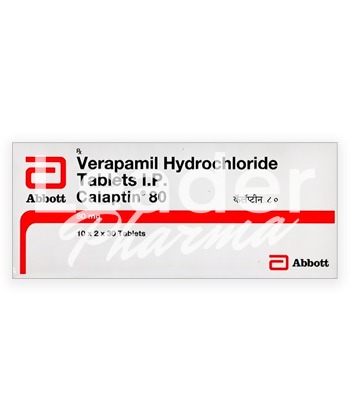
In stock
40mg · 120mg
from 14,86 £
In brief
- Verapamil hydrochloride is a calcium channel blocker that lowers blood pressure, relieves angina and slows certain fast heart rhythms.
- Offered as 40 mg tablets (60, 90, 120 or 270 per pack) and 120 mg tablets (30 to 270 per pack).
- Prescription-only (POM) in the UK, with several licensed modified-release brands alongside standard-release forms.
Verapamil and the conditions it treats
Verapamil hydrochloride blocks the movement of calcium into heart muscle and the smooth muscle of artery walls. As a result, the arteries relax, the heart works less hard and electrical conduction through the atrioventricular node slows down. UK prescribing information for oral standard-release verapamil covers three uses: mild to moderate hypertension; chronic stable, vasospastic and unstable angina; and the treatment and prevention of paroxysmal supraventricular tachycardia, together with slowing the ventricular rate in atrial fibrillation or flutter.
Strengths and quantities in this listing
Two tablet strengths are listed. The 40 mg tablets come in packs of 60, 90, 120 or 270, and the 120 mg tablets in packs of 30, 60, 90, 120 or 270. These are imported generic tablets that are not covered by a UK licence.
Typical adult doses
For high blood pressure, the SmPC suggests starting at 120 mg twice daily and increasing to 160 mg twice daily if necessary; in some cases up to 480 mg a day, in divided doses, has been used. For angina, 120 mg three times a day is the recommended dose, although 80 mg three times a day suffices for some people with angina of effort. For supraventricular tachycardias, 40 to 120 mg is taken three times a day depending on severity. With liver disease, the dose is lowered and titrated with care, and kidney impairment calls for close monitoring. Older adults generally take the usual adult dose.
Licensing of verapamil in the UK
Verapamil is a prescription-only medicine in the UK. Brands currently listed on the electronic medicines compendium include Securon SR, Half Securon SR, Vera-Til SR, Verapress MR and Vertab SR, all modified-release tablets, plus a 40 mg/5 ml oral solution and an injection used in hospital.
Contraindications and drug interactions
Verapamil hydrochloride is not used in cardiogenic shock, after a heart attack complicated by a slow pulse, low blood pressure or left ventricular failure, in second- or third-degree heart block or sick sinus syndrome without a working pacemaker, in uncompensated heart failure, with a pulse below 50 beats a minute, with systolic pressure under 90 mmHg, in atrial fibrillation or flutter with an accessory pathway such as Wolff-Parkinson-White syndrome, or in porphyria. Grapefruit juice, ivabradine and intravenous dantrolene must not be combined with it, and beta-blockers given into a vein are unsafe for anyone taking it. Because it inhibits CYP3A4 and P-glycoprotein, it raises levels of digoxin, simvastatin, atorvastatin, ciclosporin, tacrolimus, carbamazepine and colchicine; the last combination is not recommended. Oral beta-blockers, other blood pressure medicines and dabigatran need careful monitoring, and rifampicin or St John's Wort can reduce its effect. It can also push up blood alcohol levels, so drinking is best kept modest, particularly before driving.
Common side effects
Constipation is the best-known side effect. Ankle and leg swelling, low blood pressure and occasional flushing may also occur, while headache, dizziness, nausea and tiredness are reported less often. A slow pulse or heart block can develop, especially alongside other medicines that affect heart rhythm, and existing heart failure can occasionally worsen. Your doctor will decide whether verapamil is suitable and at what dose.