Ziprasidone
In stock
20mg · 40mg · 80mg
from 34,56 £
In brief
- Ziprasidone is an atypical antipsychotic used for schizophrenia and for manic or mixed episodes of bipolar disorder.
- The 20 mg and 40 mg capsules come in boxes of 30 to 360, and the 80 mg capsules in boxes of 30 to 180.
- It is not licensed in the UK, and its effect on heart rhythm means an ECG and specialist oversight matter.
Ziprasidone and how it acts on the brain
Ziprasidone is a second-generation, or atypical, antipsychotic. It blocks dopamine D2 and serotonin 5-HT2A receptors and also influences other serotonin receptors, which is thought to calm hallucinations, delusions and disordered thinking while causing fewer movement side effects than older medicines. It is used in adults with schizophrenia and to treat manic or mixed episodes of bipolar disorder of moderate severity. It is not meant for dementia-related psychosis in older people.
Ziprasidone capsules and the UK position
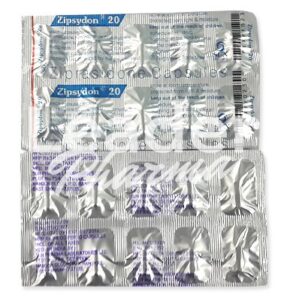
The capsules on this page come in 20 mg, 40 mg and 80 mg strengths, in packs ranging from 30 to 360 (the 80 mg strength up to 180). They are an imported generic. No ziprasidone product holds a UK marketing authorisation, so no brand of it is licensed here, and the medicine can only be used on the responsibility of a prescriber. UK psychiatrists more often choose licensed alternatives such as aripiprazole, olanzapine, quetiapine or risperidone.
Twice-daily dosing taken with meals
The capsules are swallowed whole twice a day with food, because absorption falls by up to half on an empty stomach. In acute schizophrenia, the usual starting dose is 40 mg twice daily, adjusted according to response to no more than 80 mg twice daily. For acute mania, the first day typically involves 40 mg twice daily, rising to 60 to 80 mg twice daily from the second day. In older patients and in anyone with reduced liver function, the prescriber may settle on a smaller amount and increase it more slowly. Any use in children and adolescents is a decision for specialist services.
QT prolongation and other reasons for caution
The medicine lengthens the QT interval on the ECG in a dose-related way. It must not be used by people with known QT prolongation, including congenital long QT syndrome, a recent heart attack, uncompensated heart failure or arrhythmias treated with class IA or III antiarrhythmics. Low potassium or magnesium should be corrected first. Care is also needed with a history of seizures, diabetes, raised prolactin, falls, and in the elderly, in whom antipsychotics are linked to a higher rate of stroke and death. Rare reactions include neuroleptic malignant syndrome, tardive dyskinesia, severe skin reactions such as DRESS, and blood clots.
Heart-rhythm medicines and other combinations
Ziprasidone should not be combined with other medicines that prolong the QT interval, such as amiodarone, sotalol, quinidine, dofetilide, some antipsychotics including thioridazine and pimozide, moxifloxacin, sparfloxacin, arsenic trioxide or mefloquine. Carbamazepine lowers its blood levels, while ketoconazole raises them modestly. Alcohol and sedating drugs add to drowsiness, and the antipsychotic may weaken the action of levodopa and other dopamine agonists.
Restlessness, drowsiness and other side effects
Commonly reported effects include akathisia (an inner sense of restlessness), sleepiness, insomnia, headache, dizziness, tremor, stiffness, blurred vision, nausea, constipation, dry mouth and weight change. Palpitations, fainting or a racing heart need prompt medical attention. Whether ziprasidone is used, and how its effects are followed up, is for the specialist to decide.